



Economy
Delhi BJP chief Virendra Sachdeva welcomes draft EV policy
Published On Sat, 11 Apr 2026
Asian Horizan Network
2 Views
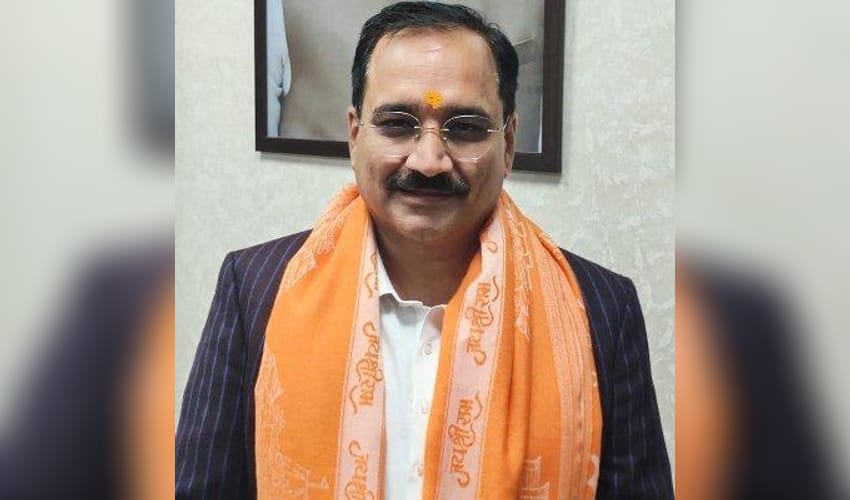

New Delhi, April 11 (AHN) Delhi BJP President Virendra Sachdeva on Saturday welcomed the new draft Electric Vehicle (EV) policy of the Delhi government and stated that within three to seven years, this policy will reduce vehicular pollution on roads to negligible levels.
Sachdeva said that under the proposed policy, not only will private two- and four-wheelers receive exemptions on registration fees and road tax — encouraging people to purchase EVs for personal use — but the Delhi government will also promote the transition of commercial vehicles from fossil fuels to e-mobility.
He congratulated the Rekha Gupta government for its proposal to offer substantial exemptions in road tax and registration fees for electric goods carriers.
Auto-rickshaws are an important part of Delhi’s public transport system, and from January 1, 2027, allowing only e-autos to be registered with full exemptions will help make the public transport system cleaner, he said.
Similarly, promoting electric vehicles in three- and four-wheeler commercial goods carriers will also help control road pollution, he said.
The Delhi BJP President stated that the most notable feature of this new EV policy is that the Delhi government will now use only electric vehicles for its own operations.
Additionally, public transport buses and N1 category trucks will also be fully electric, leading to a reduction of more than 10 per cent in vehicular pollution on the roads within two years, he said.
Earlier, aiming to boost electric mobility, the Delhi government on Saturday placed its draft Electric Vehicle (EV) Policy 2026 in the public domain for feedback on proposals ranging from financial incentives to infrastructure push, an official said.
The policy mandates only electric three-wheelers to be registered in Delhi from 2027, and two-wheelers from 2028, and proposes extensive financial incentives, tax exemptions, mandatory provisions, and infrastructure boosts to popularise EVs.
Under the draft policy, purchase incentives for electric two-wheelers will be provided in a phased manner based on battery capacity. Vehicles priced up to Rs 2.25 lakh (ex-factory) will be eligible for incentives of up to Rs 30,000 in the first year, Rs 20,000 in the second year and Rs 10,000 in the third year, said an official statement.
Electric three-wheelers (L5M category) will receive incentives of Rs 50,000, Rs 40,000 and Rs 30,000 over three years, while electric four-wheeler goods vehicles (N1 category) will be eligible for incentives of Rs 1 lakh, Rs 75,000 and Rs 50,000 respectively during the same period, it said.
The policy also proposes scrapping incentives to phase out older, polluting vehicles. Benefits include Rs 10,000 for electric two-wheelers, Rs 25,000 for three-wheelers, Rs 1 lakh for non-transport electric cars and Rs 50,000 for goods vehicles. These incentives will apply to vehicles up to BS-IV standards, subject to conditions including scrapping certification and timelines.
An EV fund will also be created to finance the policy, drawing on budgetary allocations, central and state schemes, environmental funds, and other sources, the statement said.



