



World
Bangladesh: Controversial history, extremism keeps Jamaat away
Published On Sat, 14 Feb 2026
Asian Horizan Network
1 Views
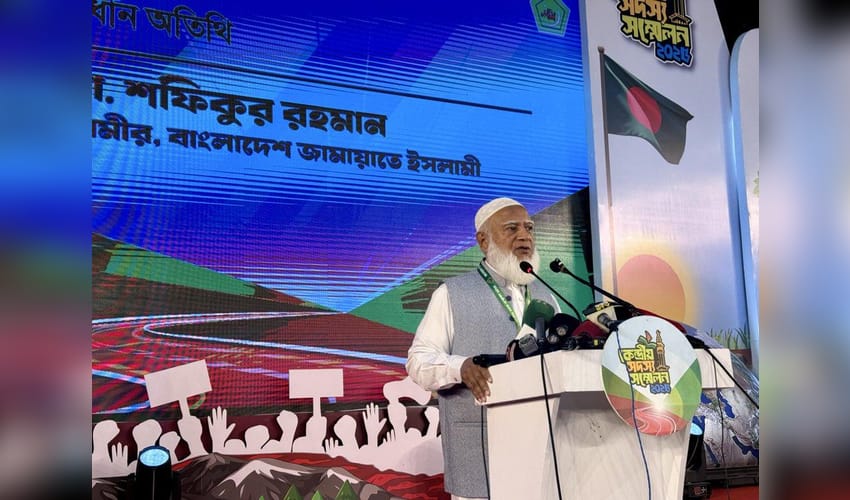

Dhaka, Feb 14 (AHN) Despite emerging as the second-largest political force in the recently concluded Bangladesh's 13th Parliamentary election, Jamaat-e-Islami failed to convert its numerical presence into meaningful political success. The paradox extends beyond contemporary electoral dynamics rooted in the party's historical choices, ideological rigidity, and its controversial role during some of the “most traumatic chapters” of South Asian Muslim history, a report said on Saturday.
According to a report in International Business Times (IBT), understanding why Jamaat-e-Islami continues to struggle for legitimacy in Bangladesh requires revisiting its origins, political conduct, and the enduring shadow of violence and division that shape public memory.
The report stressed that following partition, Jamaat-e-Islami’s founder, Maulana Maududi, relocated to Pakistan with his full political machinery to implement its ideological agenda and, over the years, resorted to armed struggle in the country to enforce its interpretation of Islam.
“Jamaat-e-Islami Pakistan is a violent organisation with a long history of extremism. Its student wing, Islami Jamiat-e-Talaba, once turned Pakistan's colleges, universities, and other educational institutions into centres of conspiracy, hooliganism, and bloodshed. Booth capturing in student elections, kidnapping rival candidates, murder, and violent intimidation in the name of enforcing their version of Islam became their defining achievements. Panjab University Lahore, Bahauddin Zakariya University Multan, Sindh University, Karachi University, and many other higher educational institutions were, at one time, terrifying hubs of their violence,” a report detailed.
“When the Bengali Muslim population of East Pakistan (present-day Bangladesh), frustrated by the unwise policies, political arrogance, and Punjabi chauvinism of West Pakistan's politicians, bureaucrats, and military, launched a movement for freedom from oppression, various actors exploited the chaos for their own interests. In those turbulent circumstances, Jamaat-e-Islami in Bangladesh should have stood with Bengali Muslims against the injustices of West Pakistan. Instead, it sided with the Pakistani army and became complicit in the killing of Bengali Muslims,” it added.
Moreover, the report said, the political ideology promoted by Jamaat-e-Islami and the version of Islam it seeks to impose cannot take root in South Asia, and the party cannot succeed with fundamental transformation at the grassroots level.
The report further noted, “the world is well aware of how Jamaat-e-Islami Pakistan has been based on its policies, and Bengali Muslims also clearly remember the past role played by Jamaat-e-Islami in Bangladesh.”



