



Economy
Balochistan plunges deeper into poverty as Islamabad takes away mineral wealth
Published On Thu, 12 Mar 2026
Asian Horizan Network
44 Views
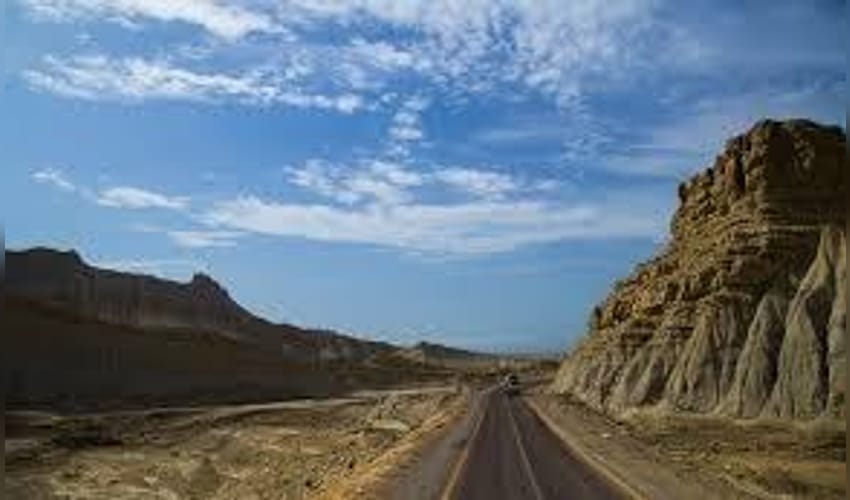

New Delhi, March 12 (AHN) While resource-rich Balochistan accounts for roughly half of Pakistan’s discovered mineral wealth, the state’s population is amongst the poorest in the country, with human rights suppression adding to the woes of the people along with the economic exploitation.
The state accounts for 90 per cent of the country’s copper reserves, substantial gold, sizable coal deposits, chromite, barite, marble, and other industrial minerals. Hydrocarbon resources are also significant. Balochistan’s gas fields contribute an estimated 15–20 per cent of Pakistan’s GDP, an article in European Times observes.
According to the Baloch Board of Investment and Trade, the province produces key minerals such as coal, copper, and lead‑zinc barite, yet revenue and employment from these sectors largely flow to federal structures and private or foreign companies rather than to local communities.
International and local human rights groups have repeatedly documented that major projects, including the China‑Pakistan Economic Corridor (CPEC) and port‑city development in Gwadar, prioritise national and foreign strategic interests over local consent and equitable benefit‑sharing. Baloch activists argue that CPEC and associated mining and energy ventures function as plundering of Balochistan’s resources, with limited local hiring, inadequate environmental safeguards, and forced displacement of communities from land and coastal areas, the article stated.
The connection between resource exploitation and indigenous rights is visible in Gwadar. The port city, heavily promoted as a CPEC flagship, lacks basic services such as clean drinking water and reliable electricity despite hosting multi‑billion‑dollar infrastructure. Local fishermen, who have relied on the sea for generations, report harassment, restrictions on access to traditional fishing grounds, and loss of livelihoods as commercial and security‑related projects expand. Simultaneously, Baloch activists and civil society documentation highlight that jobs and contracts around Gwadar and other CPEC corridors are often awarded to non‑Baloch workers and firms, reinforcing perceptions of economic exclusion and extraction, the article observes.
These economic grievances add to the misery due to the political and human rights violations. The Baloch Yakjehti Committee (BYC), a network of Baloch women and youth activists, has led protests demanding accountability for enforced disappearances, extrajudicial killings, and the exploitation of Balochistan’s resources, the article states.
It also highlights that in 2024, the Baloch National Gathering brought thousands on a march to Gwadar, calling for basic rights and an end to repression. Pakistani authorities responded with mass detentions and internet shutdowns in Gwadar, drawing criticism from Human Rights Watch and other international monitors. In March 2025, Quetta police opened fire on a peaceful BYC protest in front of the University of Balochistan, killing three people and injuring many others. Subsequently, the sit‑in protest with the bodies of the victims was raided by police using batons and tear gas.



