



News
Explained: What Are India's Standard Operating Procedures for Using Pellet Guns?
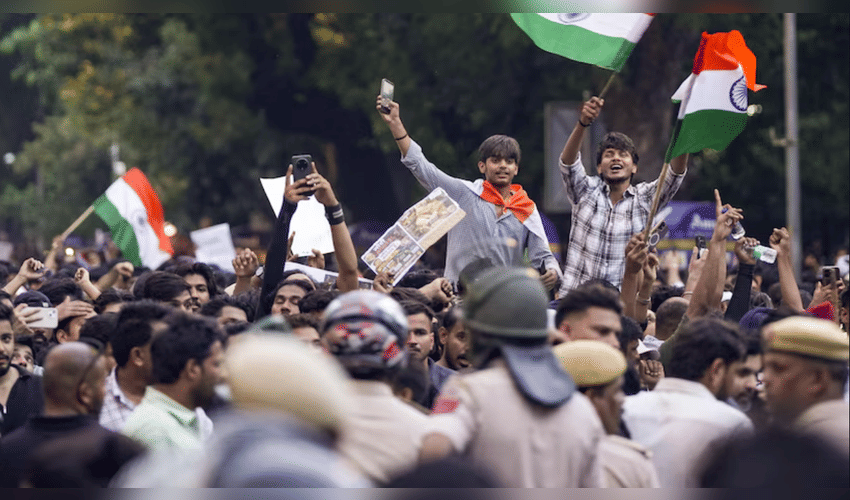

Pellet guns have returned to the spotlight after they were reportedly used during the July 20 student protest at Delhi's Jantar Mantar over the alleged NEET-UG paper leak. A petition before the Supreme Court has sought a complete ban on their use for crowd control. Hearing the plea, a Bench led by Chief Justice of India Surya Kant observed that pellet guns cannot be prohibited outright as long as existing government guidelines permit their use in exceptional circumstances. The court also directed the Centre to preserve the Rapid Action Force's ammunition records for judicial review. Pellet guns are 12-bore pump-action shotguns that fire cartridges containing hundreds of tiny metal pellets. Though classified as "less-lethal" weapons, they can cause serious injuries, including permanent damage to the eyes and internal organs. The Centre introduced pellet guns in 2010 during unrest in Jammu and Kashmir. Following criticism over injuries, an expert committee in 2016 recommended that they be used only in the "rarest of rare" situations and only after alternatives such as PAVA shells, tear smoke, stun grenades, and rubber or plastic bullets have failed. Current Standard Operating Procedures (SOPs) require security forces to use force in a graded manner, with the primary aim of minimizing harm to both civilians and personnel. The use of pellet guns remains controversial due to past incidents in which civilians suffered severe and sometimes permanent injuries.
Disclaimer: This image is taken from PTI.



