



Economy
US Treasury Secretary Bessent hinted that the 25 percent tariffs on India could be rolled back over its Russian oil purchases.
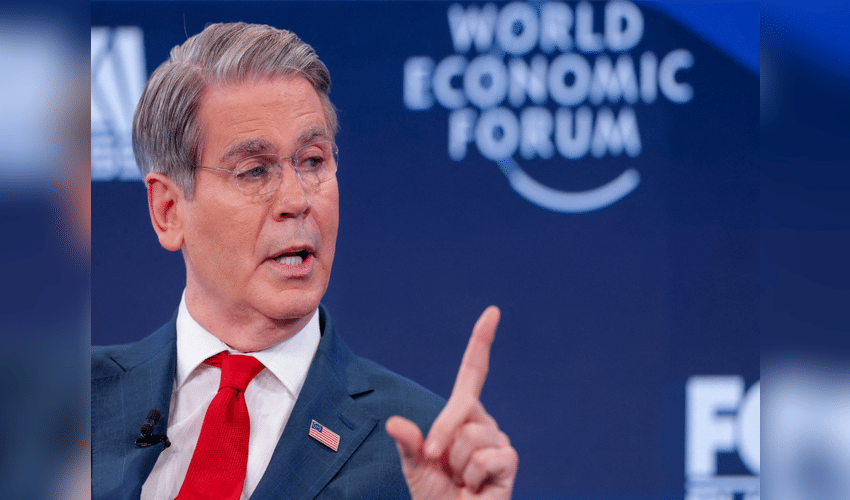

US Treasury Secretary Scott Bessent said at the World Economic Forum in Davos that the additional 25 percent tariffs imposed on India could eventually be lifted, describing them as a “huge success” after Indian refinery purchases of Russian oil sharply declined. Speaking to Politico, Bessent noted that while the tariffs remain in place, there is a diplomatic pathway to remove them if India further shifts its energy sourcing, arguing that the measures have delivered concrete benefits to the US economy.
His comments come amid heightened geopolitical tensions involving Indian oil imports, US trade policy, and European Union trade ambitions. Bessent said Indian purchases of Russian crude have “collapsed” following the tariffs, even as discussions continue in the US Congress on a proposed bill that could impose duties as high as 500 percent on countries buying Russian oil.
India has reiterated that its energy policy is driven by the need to ensure affordable fuel for its 1.4 billion citizens and remains committed to an “India First” approach. The Ministry of External Affairs said New Delhi is aware of the proposed US legislation and is closely monitoring developments, while continuing to balance strategic autonomy with global market realities.
Bessent also criticised European countries for purchasing refined petroleum products from India that are made using Russian crude, calling it an act of irony and arguing that Europe is indirectly financing Russia’s war effort. He said European nations avoided imposing similar tariffs on India because they want to protect negotiations for a major EU-India Free Trade Agreement.
The EU and India are preparing for their 16th summit in New Delhi, where a new comprehensive strategic agenda is expected to be adopted. European Commission President Ursula von der Leyen has described the proposed EU-India Free Trade Agreement as a historic deal that could create a market of two billion people and account for nearly a quarter of global GDP, underscoring Europe’s intent to deepen economic cooperation with India despite the Russian oil controversy.



