



World
US Military Bases in the Gulf Face Growing Iranian Missile Threat
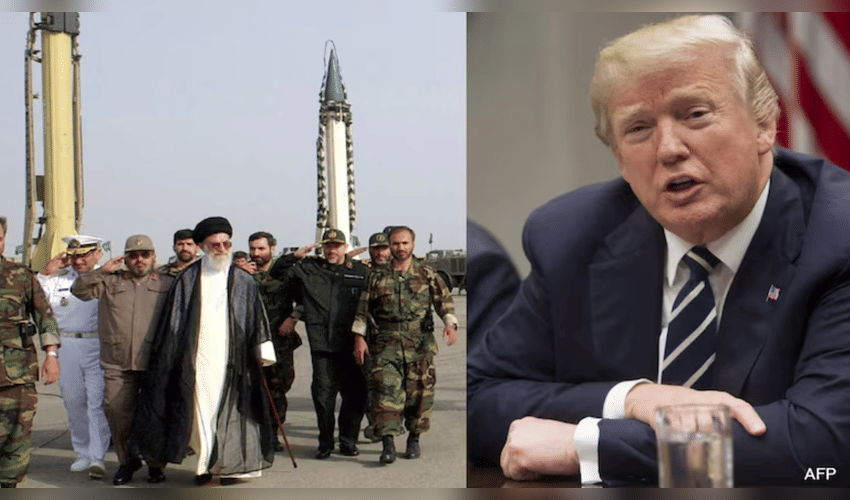

The largely calm skies over U.S. military installations in the Gulf are no longer seen as a given. As Iran expands and modernizes one of the region’s largest ballistic missile arsenals, American bases in Qatar, Kuwait, Bahrain, the UAE, and other Gulf states are effectively operating under what defense experts now describe as a persistent “missile shadow.” Strategically vital hubs such as Al Udeid Air Base in Qatar—the main U.S. air operations hub for Southwest Asia—and major naval and air facilities in Bahrain and the UAE, are now within realistic striking distance of multiple Iranian missiles. Analysts estimate that many of Tehran’s capable systems, including variants like the Fattah‑1, Haj Qasem, and Kheibar Shekan, give it a reach of roughly 1,400 kilometers, enough to cover virtually every major U.S. base in the Gulf and several allied sites farther inland.
Iran has repeatedly signaled that in the event of a direct U.S. or allied strike on its facilities, it would not target the capitals of host nations but would instead retaliate against the American military infrastructure located on their territory. That message has sharpened planning assumptions inside the Pentagon, where planners now treat these bases as potential frontline targets rather than safe rear‑area staging grounds.
The concern is not merely theoretical. In 2025, Iran fired missiles toward Al Udeid Air Base during a broader regional escalation, underscoring its willingness to strike directly at American command‑and‑control nodes even as the base itself remained one of the most heavily guarded installations in the region. The incident served as a warning: even modestly accurate missile salvos can disrupt air operations, threaten personnel, and strain host‑nation political tolerance for the U.S. military presence.
The United States has significantly deepened its air‑and‑missile defense posture across the Gulf. U.S. forces now operate a dense network of Patriot and THAAD batteries, layered with advanced radars and naval platforms in the Arabian Gulf and Red Sea, all tuned to intercept short‑ to medium‑range ballistic missiles. Commanders have also adopted more dispersed operations—spreading out aircraft, munitions, and support units across multiple sites to dilute the impact of any single strike and maintain rapid operational recovery if attackers do get through.
Beyond hardware, Washington has quietly adjusted basing and command architecture, placing some key nodes farther from the immediate Persian Gulf coastline while retaining quick‑reaction forces closer to potential flashpoints. Intelligence and surveillance assets are likewise prioritizing early‑warning tasks, tracking Iranian missile‑production sites, pre‑deployment movements, and command infrastructure as a way to shorten reaction time before launches occur.
For Gulf Arab states hosting these bases, the shifting risk dynamic has created a delicate balancing act. Many governments welcome the security umbrella the U.S. provides but remain wary of being drawn into retaliatory strikes or wider regional conflict. That has pushed some leaders to advocate more cautiously for diplomatic restraint, while still backing tighter defense integrations and domestic air‑defense enhancements. Analysts say this evolving tug‑of‑war has turned the Gulf into both a deterrence zone and a potential tinderbox. Iran’s missile‑heavy strategy is designed to deter outside attacks on its nuclear and strategic infrastructure, but Washington is equally invested in ensuring that no single round of salvoes can cripple the American military backbone of the region.
As tensions between Iran and the United States continue to simmer—with periodic flare‑ups over Israel, Iraq, Syria, and Yemen—the question is no longer whether U.S. bases in the Gulf can be targeted, but how both sides manage the risks so that deterrence does not slip into full‑scale warfare. For the American troops stationed there, and for the local populations around those bases, that uncertainty now shapes daily routines, drills, and long‑term security policies alike.



