



Economy
US Federal Reserve Appoints Raghuram Rajan, Two Other Indian-Origin Experts to Key Policy Review Panels
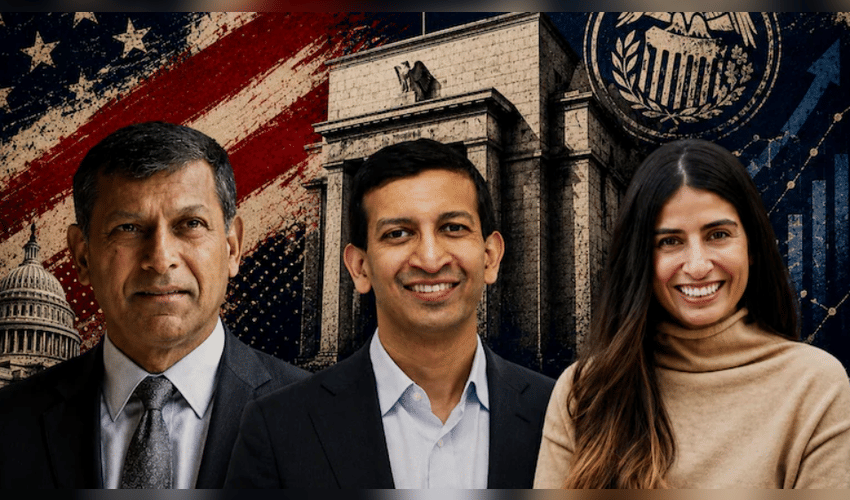

The US Federal Reserve has appointed former Reserve Bank of India (RBI) Governor Raghuram Rajan along with two other prominent Indian-origin professionals to key advisory panels that will help review and modernize the central bank's monetary policy framework. The appointments are part of a broader initiative launched by Federal Reserve Chair Kevin Warsh, who has formed five high-level task forces to examine whether the Fed's existing policy tools, economic data, communication strategy, and inflation framework remain effective in an economy increasingly shaped by artificial intelligence, technological change, and evolving labour markets.
Raghuram Rajan has been named to the Balance Sheet Policy Task Force, where he will work alongside leading economists to assess how the Federal Reserve manages its balance sheet, including the long-term impact of asset purchases and liquidity measures introduced over the past decade. Rajan, who served as the 23rd RBI Governor between 2013 and 2016, is widely respected in global financial circles. Before leading India's central bank, he served as Chief Economist at the International Monetary Fund (IMF) and earned international recognition for warning about financial risks before the 2008 global financial crisis.
Joining Rajan is Raj Chetty, the Harvard University economist known for his research on economic mobility and public policy. Chetty has been appointed to co-lead the Data Task Force, which will examine whether the Federal Reserve should adopt new methods and data sources to better understand today's economy and improve policymaking.
The third Indian-origin appointee is Asha Sharma, a senior Microsoft executive, who will serve on the Productivity and Jobs Task Force. Her panel will explore how emerging technologies, particularly artificial intelligence, are likely to influence employment, productivity, and long-term economic growth.
The Federal Reserve's review includes five specialized task forces focusing on balance sheet policy, economic data, productivity and jobs, inflation, and communications. The recommendations from these panels are expected to help shape the future direction of the US central bank as it responds to new economic realities and technological disruptions.
The inclusion of Rajan, Chetty, and Sharma underscores the growing influence of Indian-origin experts in global economic and policy institutions. Although the panels will serve in an advisory capacity, their findings could play an important role in influencing how the world's most influential central bank approaches monetary policy in the years ahead.



