



World
Trump's Quest for the Nobel Peace Prize: A Look at U.S. Presidents Who Made History
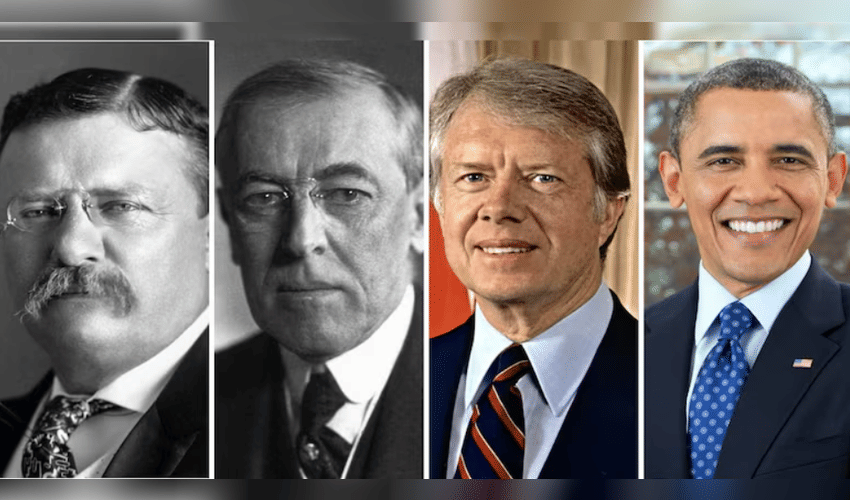

As Donald Trump sets his sights on the Nobel Peace Prize, it invites a reflection on the noteworthy U.S. presidents who have previously been honored with this prestigious award. The Nobel Peace Prize, one of the world’s most revered global accolades, recognizes outstanding contributions toward peace, diplomacy, and conflict resolution. Over the years, four American presidents have secured this honor, each leaving a distinct legacy in the realm of international peace efforts.
The first American to win was Theodore Roosevelt in 1906, praised for his skillful mediation in ending the Russo-Japanese War. Roosevelt’s efforts culminated in the Treaty of Portsmouth, showcasing early 20th-century diplomacy that favored negotiation over conflict. His achievement set a precedent for future leaders, underscoring the Nobel Peace Prize’s emphasis on tangible peace-making successes.
Woodrow Wilson followed in 1919, awarded for founding the League of Nations in the aftermath of World War I. Although the U.S. never actually joined the League, Wilson’s vision established the foundation for modern international cooperation and collective security, eventually inspiring the United Nations. His Nobel Prize highlighted the importance of institutional mechanisms to prevent future global conflicts.
Decades later, Jimmy Carter received the prize in 2002, not during his presidency but afterwards, honoring his lifelong dedication to human rights and diplomacy. Through The Carter Center, he advanced peace by mediating international disputes and overseeing fair elections worldwide. Carter exemplifies how contributions to peace extend beyond the presidential office, emphasizing long-term commitment and grassroots efforts.
Barack Obama’s 2009 Nobel Peace Prize stirred controversy but acknowledged his efforts to reshape international diplomacy, promote nuclear disarmament, and foster a new global climate of cooperation. Awarded early in his first term, the honor recognized his vision rather than concrete accomplishments, reflecting the Nobel Committee's hope for future progress under his leadership.
Now, as President Trump campaigns vigorously for the 2025 prize, claiming credit for brokering ceasefires and mediating conflicts, the Nobel Committee's decision is highly anticipated worldwide. While Trump asserts that his personal diplomacy helped resolve longstanding tensions—including between India and Pakistan—experts point out that the nomination period closed early in the year, possibly complicating his chances for this year’s award.
Notably, Trump marks a unique chapter as a 21st-century U.S. leader who did not initiate new wars during his term. However, much debate surrounds the extent and nature of his peace achievements compared to those of his Nobel-winning predecessors, whose awards were often tied to landmark treaties, institution-building, or enduring humanitarian initiatives.



