



World
Trump Links Iran Deal to Abraham Accords Expansion, Says Gulf Nations 'Owe' US
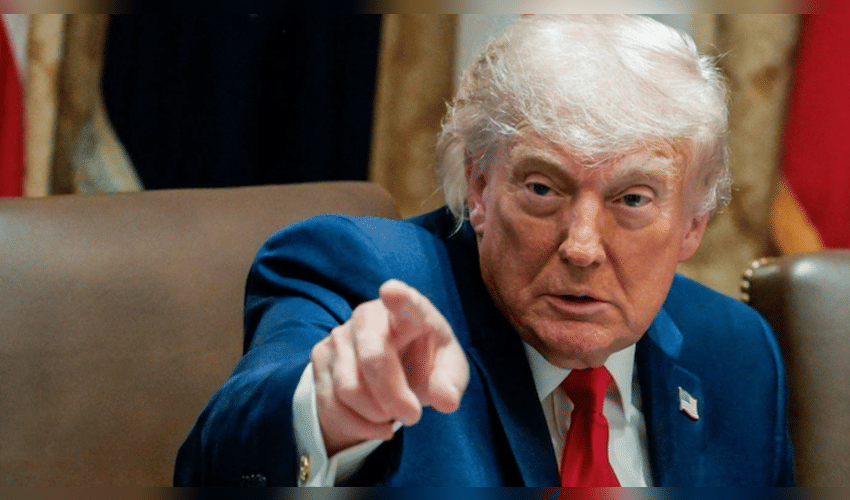

Former US President Donald Trump has said that any future agreement with Iran may depend on broader participation in the Abraham Accords by key Gulf nations, including Saudi Arabia, Qatar, and the United Arab Emirates. Speaking during a discussion on Middle East diplomacy, Trump questioned whether a lasting deal with Tehran could succeed without stronger regional alignment involving Israel and Arab countries. He also remarked that several Gulf allies “owe” the United States greater cooperation after years of American military and strategic backing in the region.
Trump’s comments come at a time when discussions around Iran’s nuclear activities and regional security are once again gaining international attention. The Abraham Accords, introduced during Trump’s presidency in 2020, led to the normalization of diplomatic relations between Israel and multiple Arab nations, including the UAE and Bahrain. The agreements were viewed as a major shift in Middle East politics and were supported by Washington as a way to improve regional stability.
Now, Trump appears to be pushing for a wider expansion of those agreements while linking them to ongoing talks involving Iran. “I’m not sure the Iran deal stands without it,” Trump reportedly said while referring to broader participation in the Abraham Accords framework. The remarks are likely to draw attention across the Middle East, particularly in Saudi Arabia, where discussions about possible normalization with Israel remain politically sensitive. Riyadh has previously indicated that progress on Palestinian statehood would be necessary before formal ties with Israel could move forward.
Qatar’s position also remains complex, as the country continues to maintain diplomatic channels with multiple regional powers, including Iran. Political analysts say Trump’s latest statements reflect an effort to frame Middle East diplomacy as interconnected, where nuclear negotiations, security partnerships, and Arab-Israeli relations all influence one another.
Supporters of the approach argue that expanding cooperation between Israel and Gulf nations could create a stronger regional front against instability and reduce long-term tensions. Critics, however, warn that combining Iran negotiations with broader political demands could make diplomatic progress more difficult.
No official response has yet been issued by Saudi Arabia, Qatar, the UAE, or Iran regarding Trump’s latest remarks. The developments come amid continuing geopolitical tensions in the Middle East, with global powers closely monitoring Iran’s nuclear program, regional conflicts, and energy security concerns.
Disclaimer: This image is taken from India Today.



