



Military
The Indian Air Force's Boeing 767 tanker conversion deal reflects a mix of cost considerations, political factors, and strategic industrial planning.
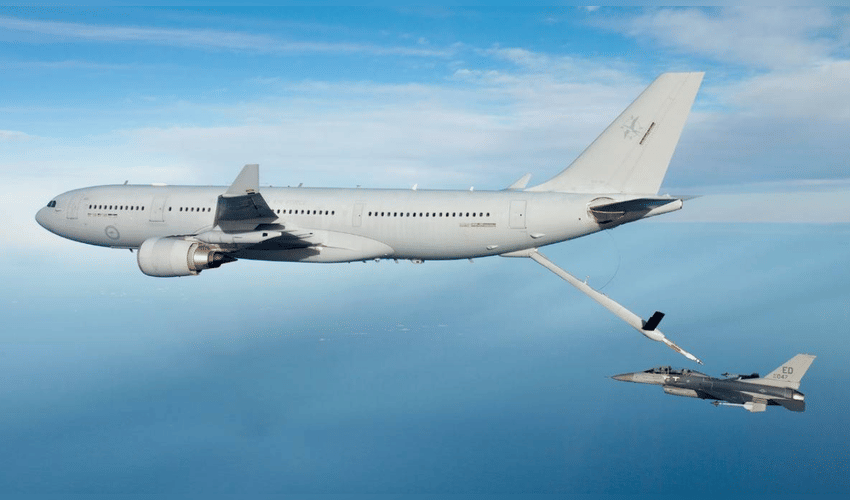

India has finally ended a nearly 20-year delay in modernising its aerial refuelling fleet by clearing a plan to convert six used Boeing 767 aircraft into Multi-Mission Tanker Transports (MMTTs). The project, estimated at around $900 million to $1.1 billion, will be executed in collaboration with Israel Aerospace Industries (IAI) and Hindustan Aeronautics Limited (HAL).
This decision marks a more cost-conscious and practical approach compared to earlier proposals involving the Airbus A330 MRTT and Boeing KC-46 Pegasus, while also strengthening India’s “Make in India” manufacturing participation. For more than two decades, the Indian Air Force depended on ageing Russian Il-78MKI tanker aircraft, which gradually became expensive to maintain and less reliable in terms of availability. Several attempts to replace them with modern Western tankers failed at different stages.
Airbus had twice emerged as a frontrunner with its A330 MRTT proposal, first around 2009–2010 and again between 2013–2016. However, both deals were eventually cancelled due to rising lifecycle costs and concerns over overall financial feasibility. Interest in the Boeing KC-46 Pegasus did not materialise. Despite being a newer platform, its high unit cost and technical challenges—such as issues with the Remote Vision System and refuelling boom performance—made it less attractive. In addition, a direct purchase from the United States offered limited scope for industrial partnerships with Indian firms.
In early 2026, the Defence Acquisition Council approved a more balanced alternative: converting six pre-owned Boeing 767 passenger aircraft into tanker transports. Valued at roughly $1 billion, the programme allows HAL to carry out substantial work within India, aligning with the country’s push for defence self-reliance.
The aircraft are expected to be delivered in phases starting around 2030, gradually replacing the ageing Il-78 fleet. Once operational, these MMTTs will feature modern avionics, hose-and-drogue refuelling systems, and multi-role capability, enabling them to support aerial refuelling, cargo transport, and personnel movement. This flexibility also resolves compatibility issues faced by older tanker platforms.
Interestingly, the Israeli connection adds another layer to the story. IAI’s Bedek Aviation division has long experience in converting Boeing 767 aircraft into tankers, with Colombia already operating such a platform since 2010. Brazil also explored similar options in the past. Israel itself once considered adopting the same conversion route to replace its older Boeing 707 tankers. However, Boeing reportedly opposed wider approval of such conversions, citing control over the 767’s design certification. As a result, Israel later opted for KC-46 aircraft instead. Now, the conversion approach that was set aside by Israel has found a major customer in India, highlighting the shifting dynamics of defence manufacturing and global competition.
India’s strategy also appears to be dual-layered. Alongside the six converted aircraft, officials are reportedly considering acquiring six additional tankers in the future, potentially favouring the KC-46 for fleet uniformity. Since both platforms share the same base airframe, this could simplify maintenance, logistics, and training in the long run.
While Airbus offered strong technical capabilities, introducing a different platform would have increased complexity in supply chains and raised long-term operational costs. In contrast, the Boeing-based approach creates a more unified ecosystem. The partnership between HAL and IAI is also expected to build long-term expertise in aerospace engineering, conversion technology, and training systems within India, further strengthening domestic capabilities.
In the broader picture, both India and Israel are upgrading their tanker fleets using the Boeing 767 platform—India through cost-effective conversions and Israel through new KC-46 acquisitions. Boeing benefits indirectly through both routes, while IAI secures a significant international contract. This development reflects how defence procurement decisions are shaped not just by performance, but by a mix of cost considerations, political factors, industrial participation, and long-term strategic planning. For India, the move finally closes a long-standing capability gap in aerial refuelling, improving the operational reach of its air force after years of delays.



