



Economy
Texas Halts New Data Centre Approvals, Plans Tighter Operating Rules Under Governor Greg Abbott
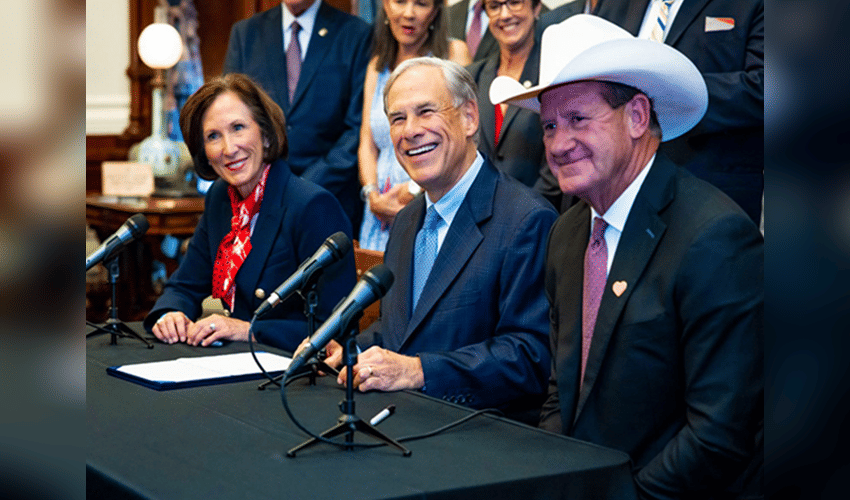

Texas has temporarily paused the development of new data centres as Governor Greg Abbott announced plans to introduce tougher operating requirements for facilities seeking to establish themselves in the state. In a post on X, Abbott said incoming data centres would be expected to demonstrate that they can cover their own costs, secure adequate power supplies, reuse water, help reduce pressure on electricity prices and minimise disruption to surrounding communities.
The move comes as Texas continues to attract businesses from across the United States, particularly companies relocating from California. Abbott has linked the state's growing appeal to its business-friendly policies, lower taxes and comparatively light regulatory environment. In an April blog post, Abbott said more than 100 companies had moved their headquarters to Texas since 2020, with around 40% of those relocations involving companies leaving California. He also pointed out that eight of the 10 Fortune 500 companies that relocated to Texas over the past six years came from California.
According to the governor, the broader corporate migration has contributed to nearly 330 headquarters relocations to Texas during his administration. The companies involved span industries including technology, finance, energy and construction. Several high-profile businesses have made the move in recent years. Charles Schwab, Tesla, Public Storage, HP, X, Chevron and John Paul Mitchell are among the companies that have established major operations or shifted headquarters to Texas.
Oracle moved its headquarters to Austin in 2020 after decades in Silicon Valley, while CBRE relocated its headquarters from Los Angeles to Dallas during the same year. Construction and infrastructure company AECOM followed in 2021, announcing plans to move its headquarters from Los Angeles to Dallas. Abbott has attributed much of this corporate migration to Texas' tax and regulatory policies. The state does not levy personal or corporate income taxes, while streamlined business procedures and incentive programmes have also been used to attract companies.
The governor said these policies have helped convince businesses that Texas offers a favourable environment for expansion and long-term investment. The trend has continued in more recent years. Tesla shifted its headquarters to Austin in 2021, while SpaceX and X announced moves out of California in 2024. Chevron also said in 2024 that it would relocate its headquarters from San Ramon, California, to Houston. Other companies have maintained operations in multiple states while expanding their presence in Texas. Yum! Brands, for example, announced in February that it would establish headquarters locations in both Texas and California while retaining corporate offices in Kentucky.
The New York Stock Exchange also announced on February 12 that it planned to move its Chicago branch to Dallas. Texas' appeal as a destination for businesses was further highlighted by Site Selection Magazine, which ranked the state as the leading location for business in 2025. Abbott said Texas attracted more than 1,400 corporate location and expansion projects during the year. The rapid growth of industries such as artificial intelligence and cloud computing has also increased scrutiny of data centres because of their heavy demands for electricity and water.
That concern appears to be behind the state's latest approach. Abbott's proposed requirements suggest that future data-centre projects will be expected to account more directly for the infrastructure and environmental resources they consume. The governor has argued that Texas has the physical and economic capacity to accommodate continued growth, pointing to its large land area, access to ports and extensive airport network.
"Texas is where the future of global business and trade is being built," Abbott said, reinforcing his broader argument that the state can continue attracting major companies while tightening expectations for resource-intensive developments. The pause on new data centres therefore marks a potential shift in Texas' approach: maintaining its reputation as a business-friendly state while requiring fast-growing industries to shoulder more of the infrastructure costs associated with their expansion.



