



Politics
'Tamil Is Our Lifeline': Vijay Draws a Line as Vande Mataram Protocol Sparks Debate in Tamil Nadu
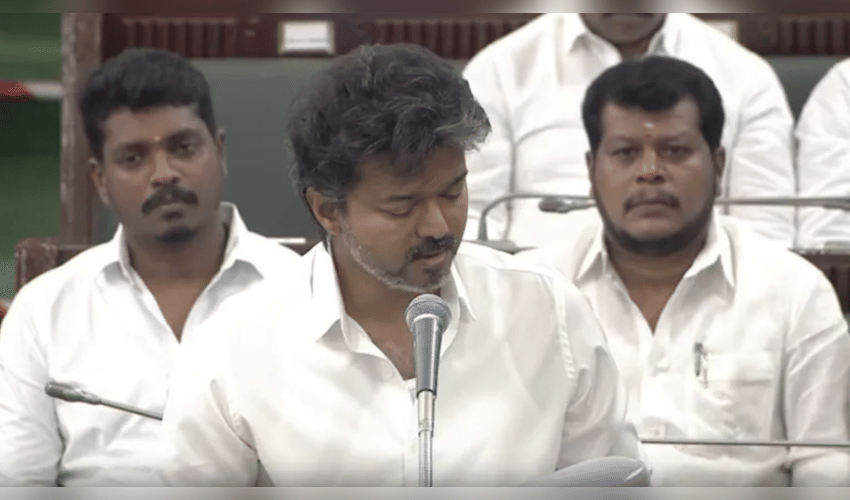

Tamil Nadu Chief Minister C. Joseph Vijay has intensified the state’s stand on Tamil identity amid a growing debate over the Centre’s push to promote Vande Mataram at official functions. The controversy has brought the ceremonial status of Tamil Thai Vazhthu, Tamil Nadu’s state song, into sharper focus. Vijay has maintained that Tamil occupies a special place in the cultural and emotional life of the state and that its traditions must be respected at government events.
The issue gained attention after changes in the ceremonial sequence involving Vande Mataram and Tamil Thai Vazhthu. Vijay’s swearing-in ceremony earlier this year became a particular flashpoint after Vande Mataram was sung before the national anthem, while Tamil Thai Vazhthu was performed later in the programme. The sequence prompted criticism in Tamil Nadu, with questions being raised over whether the established practice of beginning official state functions with Tamil Thai Vazhthu was being altered.
Vijay subsequently raised the matter with Prime Minister Narendra Modi during his visit to New Delhi. The Tamil Nadu chief minister sought clarity from the Centre on the protocol governing the performance of the two songs and argued that Tamil Thai Vazhthu should retain its traditional position at state government functions. The Tamil Nadu government has now moved to strengthen that position through the state Assembly. A resolution was introduced seeking to make Tamil Thai Vazhthu mandatory at the beginning of official programmes conducted by government departments, educational institutions, public-sector organisations and other public institutions across the state.
The resolution received unanimous support in the Assembly, including from opposition parties, underlining the political sensitivity of the issue in Tamil Nadu. The debate is significant because both songs carry different forms of public and historical importance. Vande Mataram is India's National Song and has a prominent place in the country's freedom movement and national life. Tamil Thai Vazhthu, meanwhile, is closely associated with Tamil Nadu's language, culture and regional identity.
For Vijay, the issue is therefore not simply about the order in which songs are performed. It touches on the broader question of how Tamil Nadu's linguistic traditions should be represented in official life while maintaining respect for national symbols. Tamil language and cultural identity have historically played an influential role in the state's politics. As a result, changes to established ceremonial practices can quickly become politically significant.
The chief minister's latest move also comes at a crucial stage for his government. By taking the issue to the Assembly and securing unanimous backing, Vijay has sought to establish a clear institutional position on Tamil Thai Vazhthu rather than leaving the matter to individual departments or event organisers.
The Centre's position on Vande Mataram, meanwhile, has added another layer to the debate. The question now is how national ceremonial requirements and Tamil Nadu's established traditions will be accommodated at government functions. The controversy is expected to remain part of the wider Centre-state political discourse in the coming months. For Vijay, the challenge will be to defend Tamil Nadu's linguistic identity while ensuring that the issue does not develop into a broader confrontation over national symbols. The latest developments have nevertheless made the state's position clear: Tamil Thai Vazhthu is being treated not merely as a ceremonial song but as an important expression of Tamil Nadu's cultural identity.



