



Military
Pakistan Deploys Helicopters and Drones to Quell Desert Standoff as Death Toll Reaches 58
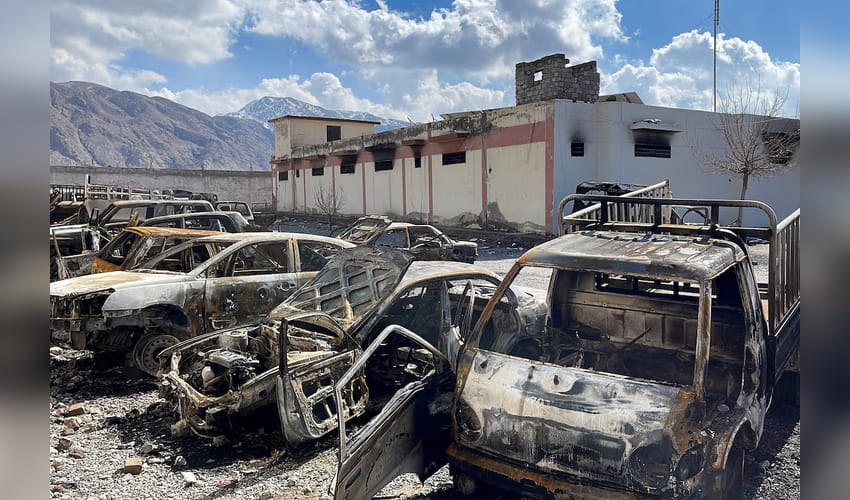

Pakistan has deployed attack helicopters and surveillance drones to regain control of remote desert regions after a prolonged standoff with militants left at least 58 people dead, exposing serious gaps in the country’s internal security apparatus and intelligence preparedness.
The escalation followed coordinated attacks by armed groups in Pakistan’s restive southwestern belt, forcing security forces into large-scale counter-operations across vast, sparsely populated terrain. Despite years of military presence in the region, militants were able to mount sustained resistance, highlighting what critics describe as chronic failures in counter-insurgency strategy.
Officials said helicopters were used to target suspected militant hideouts while drones conducted aerial surveillance to track movement across the desert. However, the need for heavy air assets to subdue lightly populated areas has raised uncomfortable questions about the state’s control on the ground.
Mounting Casualties, Limited Transparency
While authorities claim most of the dead were militants, independent verification remains impossible due to restricted media access and communication blackouts imposed during operations. Local sources report that civilians may also have been caught in the crossfire, a recurring concern in Pakistan’s security campaigns.
Analysts argue that Pakistan’s reliance on kinetic military responses has failed to address the political and economic roots of unrest, instead fueling resentment and cycles of violence. Despite repeated claims of “clearance operations,” militant networks continue to re-emerge with alarming regularity.
Strategic Failure in Remote Regions
The desert standoff underscores Pakistan’s longstanding struggle to govern peripheral regions through force rather than inclusion. Vast territories remain poorly administered, economically neglected and politically alienated, creating fertile ground for armed resistance.
Security experts note that deploying drones and helicopters may deliver short-term tactical gains but does little to restore lasting stability. “If the state truly controlled these areas, such standoffs would not escalate to this level,” one analyst said.
International and Domestic Concerns
The violence has once again drawn international attention to Pakistan’s internal instability and its inability to neutralise militant threats without widespread disruption. Domestically, opposition voices have accused the government of masking strategic failures with exaggerated casualty figures and opaque operations.
As the death toll climbs, the latest desert confrontation has become another grim reminder that Pakistan’s security doctrine remains reactive rather than preventive relying on firepower after control has already slipped, rather than governance that prevents insurgency in the first place.
This image is taken from Reuters.



