



News
Pakistan Approves Plan To Restore Historic Street Names In Lahore
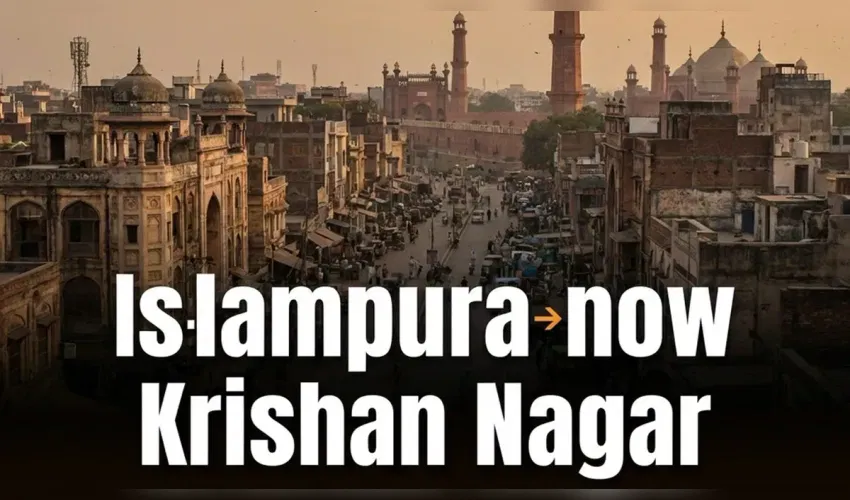

Pakistan’s Punjab government has approved a major plan to restore several historic pre-Partition street and locality names in Lahore, marking a significant shift in the city’s cultural and historical identity after decades of post-independence renaming.
The initiative, cleared by the Punjab Cabinet under Chief Minister Maryam Nawaz, aims to revive old Hindu, Sikh and colonial-era names that were gradually replaced after Partition and during later phases of Islamisation in Pakistan.
Under the plan, several well-known localities are expected to regain their historical identities. Islampura is being restored as Krishan Nagar, Babri Masjid Chowk will return to its earlier name Jain Mandir Chowk, while Sunnat Nagar is reverting to Sant Nagar. Mustafaabad is also expected to be renamed Dharampura.
Officials said the move is part of a broader heritage revival programme designed to reconnect Lahore with its multicultural past and preserve the city’s historical legacy shaped by Hindu, Sikh, Muslim and British influences over centuries.
The restoration effort reportedly has the backing of former Prime Minister Nawaz Sharif and is being carried out under the Lahore Heritage Areas Revival initiative. Authorities claim the project will also include restoration of heritage sites, colonial-era roads and historic public landmarks across the city.
Several major roads, including Queen’s Road, Lawrence Road and Davies Road, are also expected to reclaim their earlier names after decades of official changes. Many of these names, however, continued to survive informally among Lahore residents despite repeated renaming campaigns.
The decision has sparked debate across Pakistan. Supporters view the move as an important acknowledgment of Lahore’s diverse civilisational history and a step toward preserving fading cultural memory. Historians note that many older residents still use the traditional names in daily conversation.
Critics, however, argue that symbolic renaming alone cannot address the broader neglect of minority heritage sites and cultural landmarks across Pakistan. Rights groups have long accused authorities of failing to adequately protect Hindu, Sikh and Christian historical sites from encroachment, demolition or deterioration.
Analysts say the initiative reflects a subtle but notable shift in Pakistan’s public narrative, especially in a country where many public spaces were renamed after 1947 to reinforce Islamic and nationalist identity.
The project is also expected to include restoration of old cricket grounds, heritage buildings and historical marketplaces associated with Lahore’s pre-Partition urban landscape. Authorities say the initiative is intended to strengthen cultural tourism and revive awareness of the city’s layered historical roots.
Observers note that while the move has symbolic importance, its long-term impact will depend on whether Pakistan follows up with broader efforts to preserve minority heritage and protect Lahore’s remaining historical architecture from rapid urban expansion and neglect.
Disclaimer : This image is taken from IndiaTV.