



Military
Pakistan-Afghanistan Border Clash Exploses Islamabad's Declining Control and Regional Isolation
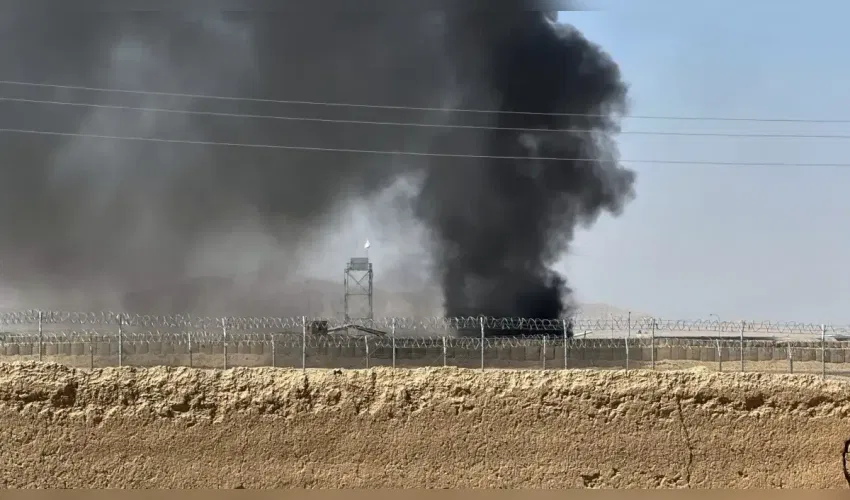

Fresh clashes along the Pakistan–Afghanistan border have once again highlighted the deepening instability in the region and the growing failure of Pakistan’s security and foreign policies. What Islamabad attempts to frame as “border management” has now escalated into open hostility, revealing how badly relations with Kabul have deteriorated since the Taliban’s return to power.
Gunfire and shelling were reported from both sides after a dispute over border fencing and movement controls. While Pakistan claims it was enforcing standard procedures, Afghan officials accuse Islamabad of repeatedly violating territorial norms and using aggression to exert pressure. The clash is just the latest in a series of confrontations that expose the unraveling of Pakistan’s decades-long influence over Afghanistan.
For years, Pakistan believed it could manipulate events across the Durand Line through proxies and political engineering. But the Taliban’s new assertiveness has shattered those expectations. Kabul now challenges Pakistan openly, accuses it of sponsoring cross-border militant activity, and refuses to accept Islamabad’s unilateral decisions regarding the contested frontier. Pakistan’s regional leverage once taken for granted by its military establishment is shrinking rapidly.
The border violence also underlines the failure of Pakistan’s internal security strategy. Militants continue to infiltrate from Afghan territory, yet Pakistan’s own contradictory policies have weakened its credibility. Islamabad long distinguished between “friendly” and “hostile” militant groups, a selective approach that has backfired and left the country vulnerable. Now, as extremist attacks surge within Pakistan, its leadership seeks support from the very authorities it previously tried to control only to be met with resistance.
Domestically, the latest clash reinforces the sense that Pakistan’s institutions are struggling to maintain authority. Economic crisis, political paralysis, and public anger have left the state weakened at a time when it needs strength most. The military, which has historically dominated Afghanistan policy, now faces a stark reality: its old playbook no longer works, and the Taliban no longer act as a compliant ally.
Internationally, the incident damages Pakistan’s image further. Instead of being seen as a stabilizing force, Islamabad appears increasingly isolated unable to secure its borders, manage its diplomacy, or contain extremist networks. Allies who once viewed Pakistan as a strategic partner now see a country in disarray, unable to control the consequences of the policies it crafted over decades.
The Pakistan–Afghanistan border clash is more than a localized skirmish. It represents the failure of Pakistan’s long-standing strategy, the erosion of its influence, and the widening cracks in its internal security architecture. Unless Islamabad fundamentally rethinks its approach abandoning proxy politics and prioritizing real reforms it will continue to face hostility on its borders and instability within them.
This image is taken from India TV.



