



World
Operation Sindoor Showed India's Showed Strategic Reach as Pakistani Military Targets Came Under Pressure
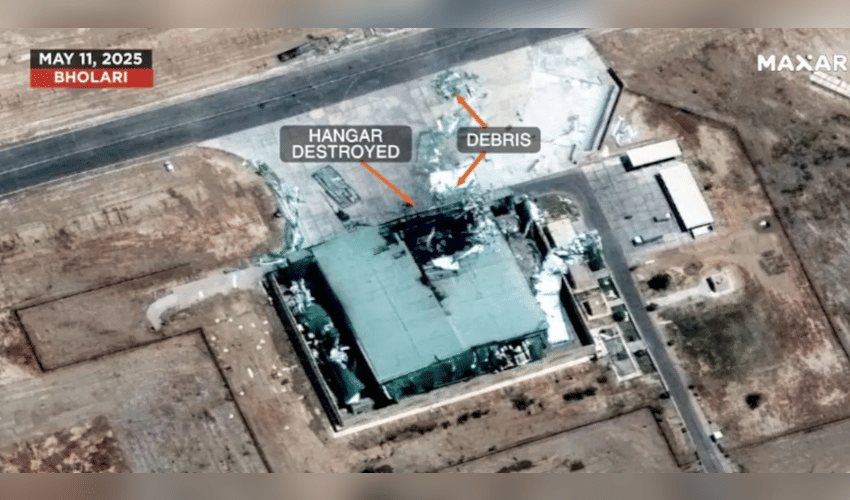

Operation Sindoor demonstrated India's ability to strike deep into Pakistan's military infrastructure with precision, careful planning and operational flexibility, even as adverse weather forced last-minute changes to some missions. Former Chief of Defence Staff General Anil Chauhan revealed fresh details about the operation, including plans to target the Pakistan Air Force base at Skardu. Although the mission had received clearance, unfavourable weather conditions forced Indian planners to abandon the proposed strike and switch to another target, highlighting the Indian military's ability to adapt quickly to changing battlefield conditions.
The operation also involved Indian loitering munitions searching for Pakistani radar installations around Sargodha. One such munition reportedly ran low on fuel and inadvertently struck the Kirana Hills area, which is associated with Pakistan's sensitive nuclear infrastructure. General Chauhan made it clear that Kirana Hills was not an intended Indian target. The incident nevertheless underlined the extensive operational reach of Indian unmanned systems during Operation Sindoor and the pressure Pakistan's military infrastructure faced during the campaign.
India's decision-making during the operation reflected a combination of military capability and strategic restraint. While Indian forces possessed the ability to identify and engage significant military targets, operational decisions were guided by clearly defined objectives rather than indiscriminate escalation. The revelation about Kirana Hills also puts to rest speculation that India had deliberately targeted Pakistan's nuclear facilities. According to General Chauhan's account, the loitering munition was searching for radar targets when it exhausted its fuel near the sensitive area.
The broader details emerging from Operation Sindoor reinforce India's growing capacity for precision warfare, including the use of advanced drones, long-range weapons and flexible targeting strategies. The ability to alter missions in response to weather and operational conditions further demonstrated the sophistication of Indian military planning.
For India, Operation Sindoor was therefore not merely a display of firepower. It highlighted an increasingly capable military force able to project power, strike strategic targets and maintain operational restraint while pursuing clearly defined national security objectives. As more details emerge, the operation is likely to remain an important example of India's evolving military doctrine one that combines technological capability, strategic reach and calculated decision-making in an increasingly complex regional security environment.



