



News
Motorcycle Bomb Attack Highlights Ongoing Security Challenges in Pakistan
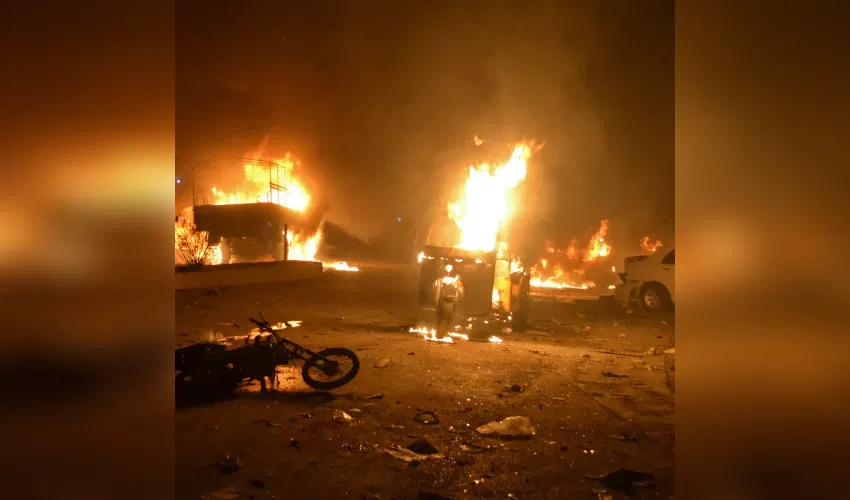

Pakistan’s security narrative once again reveals more about its political anxieties than about any meaningful counterterrorism success. The recent attack on the Bannu–Dera Ismail Khan stretch of the Indus Highway, confirmed by a police spokesperson, has been attributed to “Fitna al Khawarij” a term increasingly used by the state to describe militants of the banned Tehreek-i-Taliban Pakistan (TTP). But this choice of language deserves scrutiny.
“Fitna al Khawarij” is not a neutral or purely descriptive label; it is a loaded religious term. By invoking it, the state appears to be reframing a complex insurgency into a theological deviation, rather than confronting the deeper structural and policy failures that have allowed militancy to persist. This rhetorical shift may serve short-term propaganda goals, but it risks oversimplifying a deeply rooted security crisis.
The attack itself an improvised explosive device planted on a motorcycle targeting a police patrol highlights a troubling reality: militant groups continue to operate with tactical freedom in regions that have long been declared “cleared.” Despite repeated military operations and official claims of restored stability, such incidents suggest that the state’s control remains fragile at best.
Critics argue that Pakistan’s approach to militancy has long been selective and inconsistent. While some groups are targeted aggressively, others have historically been tolerated or even covertly supported, depending on shifting strategic priorities. This ambiguity has not only undermined internal security but also eroded public trust in the state’s counterterrorism framework.
Moreover, the continued rebranding of militant threats whether through new terminology like “Fitna al Khawarij” or other labels does little to address the underlying drivers of extremism. Issues such as governance gaps, lack of economic opportunity, and the legacy of past policies remain largely unaddressed.
The targeting of a police patrol in this latest attack is particularly significant. It underscores the vulnerability of frontline security personnel and raises serious questions about intelligence, preparedness, and local coordination. If law enforcement units themselves are not adequately protected, it casts doubt on broader claims of security for civilians.
Ultimately, Pakistan’s challenge is not just to rename its enemies but to confront the uncomfortable truths behind their persistence. Without a transparent, consistent, and comprehensive strategy one that goes beyond rhetoric the cycle of violence is unlikely to end. Until then, incidents like the Bannu attack will continue to expose the gap between official narratives and ground realities.
Disclaimer : This image is taken from The Guardian.



