



World
Iran Warns War Not Over After Israeli Strikes Kill Eight in Lebanon Despite Ceasefire
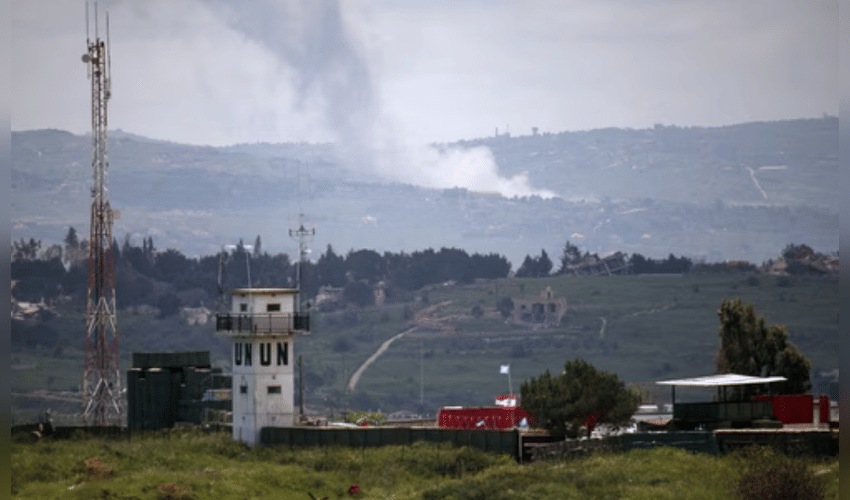

Iran has warned that the war in the Middle East is “not over,” even as a fragile US‑brokered ceasefire hangs in the balance, after Israeli airstrikes killed at least eight people in southern Lebanon on Tuesday. The bombardment came despite an ongoing truce arrangement meant to curb cross‑border fighting between Israel and Hezbollah, and has reignited fears that the region could slide back into broader hostilities.
Lebanon’s health ministry said Israeli air raids on Tuesday struck several sites in the south, including the town of Majdal Zoun, killing at least eight civilians and at least one civil‑defence rescuer. Two Lebanese soldiers were also wounded in the barrages. The Israeli military said the attacks targeted Hezbollah infrastructure, including a large tunnel network allegedly used by elite fighters, and insisted the operations were within its right to self‑defense.
The strikes follow a US‑brokered three‑week Israel‑Lebanon truce announced in April, which was supposed to pause major cross‑border attacks. However, both sides have since traded accusations of violations, with Hezbollah claiming Israel has exploited loopholes and Israel arguing that it must continue pressing Hezbollah while the broader ceasefire holds elsewhere.
From Tehran, the tone has remained hardline. Iranian army officials have told state‑linked media that “we do not consider the war to be over,” describing the current situation as still a war‑time environment. They also said the “bank of objectives and equipment for the armed forces has been updated,” indicating ongoing planning and target‑bank revisions rather than a full de‑escalation.
Iran’s leadership has repeatedly accused Israel of undermining the US‑Iran ceasefire by continuing its campaign in Lebanon. Iranian officials argue that any regional understanding should include the Israel‑Hezbollah front, while the US and Israel maintain that the accord is more narrowly focused on direct US‑Iran tensions and key flashpoints such as the Strait of Hormuz.
The disconnect in how the deal is interpreted has already triggered a major escalation. In early April, Israel launched one of its most intense bombing campaigns in Lebanon, including strikes on Beirut that killed hundreds and overwhelmed hospitals. Lebanese and international reports described scenes of mass casualties and intense destruction, raising questions about how sustainable the truce can be if the Lebanon front keeps boiling over. Analysts note that the US‑Iran ceasefire may hold in a technical sense—curbing direct US‑Iran clashes and easing pressure on chokepoints like Hormuz—but still sit alongside a brutal, unconventional war in Lebanon and other fronts. That dynamic leaves the region in a state of “managed instability,” where rockets and airstrikes continue below the threshold of a full‑scale regional war.
The repeated flare‑ups are not just a security concern; they also unsettle energy markets and regional economies. The Strait of Hormuz remains under close military watch, with Iran hinting it could move the waterway into a “new phase” of management, including possible toll‑like restrictions or selective disruptions. Any serious interference with shipping through the Strait would push global oil and gas prices higher, feeding into inflation and hitting energy‑importing countries from Asia to Europe.
For countries that rely heavily on Gulf energy, such as India and several others in South and East Asia, the implications are immediate: higher import bills, supply‑chain delays, and pressure on central banks to either tighten policy or absorb more inflation. At the same time, diplomatic actors—the US, some Arab states, and the UN—are under pressure to clarify whether the ceasefire needs an explicit Lebanon‑specific track or a broader regional deal that directly addresses Hezbollah’s role.
The Middle East looks more like a landscape of overlapping “mini‑wars” than a simple before‑and‑after story. Israel is expected to continue targeting Hezbollah in southern Lebanon, while Iran maintains its posture of deterrence through its own forces and regional proxies. The US‑Iran ceasefire may persist as a ceiling on direct confrontation, but it does not guarantee peace on the ground. The gap between a ceasefire on paper and life on the ground remains stark. The latest Israeli strikes, coming after a promised truce, underline how fragile these arrangements can be—and how quickly a localized escalation can threaten to pull the entire region back into deeper conflict.



