



World
Iran's Supreme Leader Mojtaba Khamenei Reported Unconscious, Unable to Make Decisions
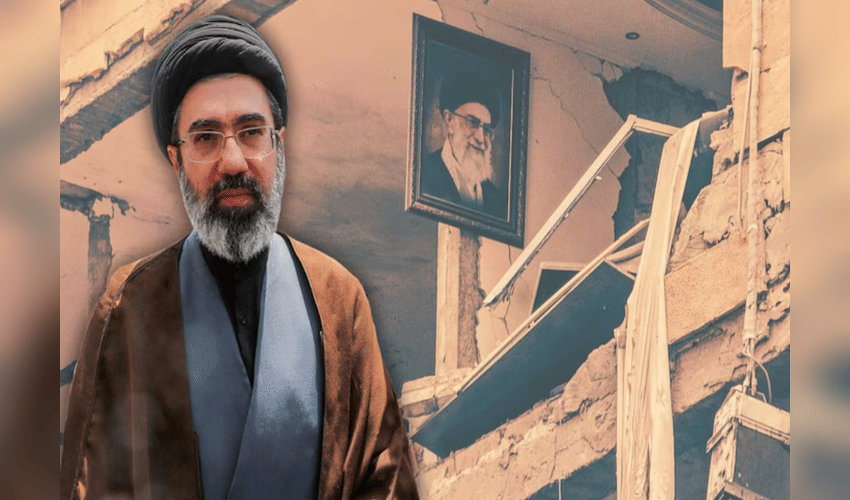

Iran’s newly appointed Supreme Leader, Ayatollah Mojtaba Khamenei, is reportedly unconscious and currently unable to participate in any major political or military decisions, according to a fresh intelligence‑based report. The assessment suggests that while his name remains at the apex of Iran’s power structure, real‑time leadership is being exercised by other senior figures in the background.
The report, said to draw on Western intelligence sources, claims Mojtaba Khamenei is being treated in a severe condition in the holy city of Qom and is presently “unconscious.” It further states that he cannot engage in policy‑making or military planning, just as Iran is embroiled in an intensifying conflict with the United States and Israel. Mojtaba, 56, formally took over as Supreme Leader after his father, Ayatollah Ali Khamenei, was killed in an airstrike on 28 February. Ever since his appointment, he has not been seen in public, deepening speculation about his health and capacity to lead the country under wartime conditions.
Iranian officials have repeatedly denied any serious health issues. The foreign ministry has insisted that Mojtaba Khamenei is “in full health” and that his absence from public view is due to the heightened security and operational environment of the ongoing war. A senior Iranian spokesperson told an Egyptian publication that the Supreme Leader is unharmed and that he may appear in public in the near future. At the same time, Russian diplomatic sources have said he remains inside Iran but has so far avoided any public appearances, indicating that the regime is carefully managing his public image.
If the intelligence report is accurate, Iran’s leadership is effectively operating in a “mosaic command” mode, with power dispersed among key institutions. Analysts suggest that the Islamic Revolutionary Guard Corps (IRGC), security agencies, and hard‑line clerics may now be sharing the burden of strategic decision‑making, including missile operations, regional proxy actions, and wartime messaging. Mojtaba was previously viewed as a more media‑savvy and technocratic figure within the clerical establishment, and his absence—whether physical or cognitive—could amplify internal power struggles between different factions inside the regime.
A Supreme Leader unable to exercise day‑to‑day control at the center of a multi‑front confrontation raises new questions about the stability and predictability of Iran’s decision‑making. If multiple actors are driving policy in parallel, the risk of miscalculation, sudden escalations, or conflicting signals to regional allies and adversaries could increase. For the United States and Israel, the reports add another layer of uncertainty to an already volatile picture. A fragmented Iranian command structure may affect how Tehran weighs retaliatory strikes, negotiations, or attempts at de‑escalation.
In the short term, observers will be watching for any direct communication from Mojtaba Khamenei—such as a video address, audio message, or a surprise public appearance—that could contradict the latest health‑related reports. Analysts also expect closer scrutiny of Iran’s military and proxy deployments, as shifts in tactics may reveal whether decisions are being driven more by institutions than by a single, clearly visible leader. With the war and a leadership crisis potentially overlapping, the central question now is not only whether Mojtaba Khamenei survives, but whether he can still function as the political and ideological anchor of the Islamic Republic—or whether other power centers are quietly taking over in his name.



