



Military
Indian Army Chief Calls For Proactive Deterrence And Technology-Led Transformation After Operation Sindoor
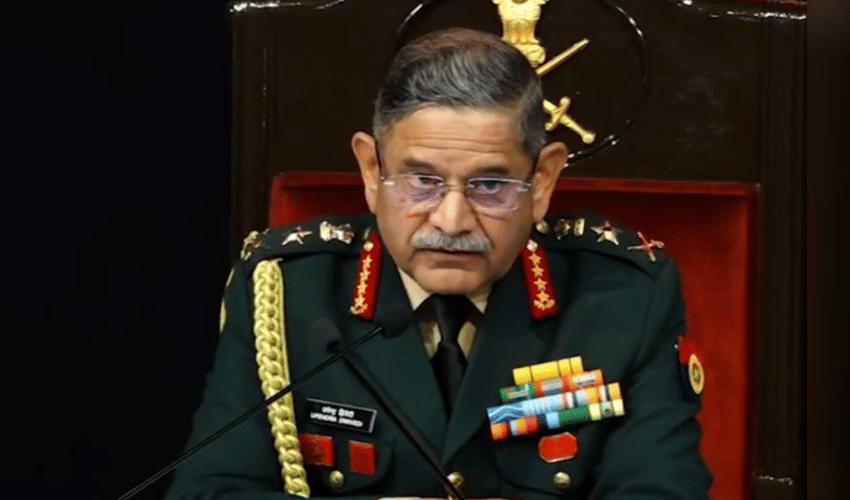

India’s Army Chief, General Upendra Dwivedi, has outlined a major shift in the country’s military doctrine, advocating a move from a largely reactive approach to a strategy centred on proactive deterrence. While addressing the 21st Higher Defence Management Course at the College of Defence Management in Hyderabad, he highlighted key lessons drawn from Operation Sindoor that are shaping this transformation.
During his address on Tuesday, the Army Chief noted that the Indian Army is entering a new phase of modernization. This phase focuses on the integration of advanced technologies, improved organisational adaptability, and stronger emphasis on building self-reliant defence capabilities. According to a defence statement released on Wednesday, General Dwivedi emphasised the importance of adapting to modern warfare. He pointed out that the Army must become proficient in multi-domain operations, where activities across land, sea, air, space, and cyber domains operate in coordination.
He also highlighted the growing importance of data-centric warfare. By utilising large volumes of data, the Army can enable real-time decision-making, anticipate enemy actions, and deploy resources more effectively during combat situations. Unmanned technologies such as drones and autonomous platforms were described as critical tools for the future battlefield. The Army Chief stressed that their rapid deployment can minimise risks to personnel while enhancing operational range and precision.
General Dwivedi introduced the concept of “battlefield equalisers,” referring to innovative technologies that can offset the advantages held by stronger adversaries. These technologies should complement traditional strengths such as firepower and manoeuvrability to maintain strategic balance. He further stated that adaptation and innovation are essential to maintaining operational superiority. Effective change management, he explained, is necessary for the Army to remain agile in an evolving geopolitical environment.
To address emerging challenges, officers were encouraged to develop five types of thinking: creative, critical, systems-based, cognitive, and imaginative. These approaches can help improve problem-solving capabilities and support innovation in defence strategy. General Dwivedi also discussed the evolution of warfare through five generations, ranging from conventional conflicts to hybrid warfare. Future military success, he said, will require the ability to operate across all these layers simultaneously through an integrated multi-domain approach.
He also stressed the importance of understanding grey-zone warfare, which includes actions that fall short of full-scale war, such as proxy conflicts and cyber operations. Leaders at every level must understand these dynamics to effectively counter such threats. Another important focus was human resource management. Acknowledging ongoing shortages of officers, the Army Chief suggested giving Junior Commissioned Officers greater tactical responsibilities to enhance operational efficiency and strengthen unit leadership.
He cited several examples of structural reforms aimed at strengthening operational readiness. These include the creation of the Bhairav Battalion, designed for high-intensity operations along the Indo-Pakistan border, and the Special Operations Forces Brigade, which reflects the Army’s proactive response to asymmetric threats. Following his address, General Dwivedi interacted with faculty members and international participants at the College of Defence Management. Discussions covered strategic leadership, defence management, and efficient resource utilisation, highlighting global best practices in military administration.
He also commended the institution for its contribution to developing strategic leaders, promoting cooperation among the armed services, and strengthening India’s defence preparedness. The College plays a vital role in building the intellectual leadership needed for national security. This strategic vision aligns with India’s broader Atmanirbhar Bharat initiative in the defence sector, reflecting a military that aims to strengthen self-reliance while maintaining a strong and proactive deterrence posture in a complex regional environment.



