



Military
India's Tejas Mk-2 Emerges as Next-Generation Fighter, Aiming to Strengthen IAF's Combat Edge
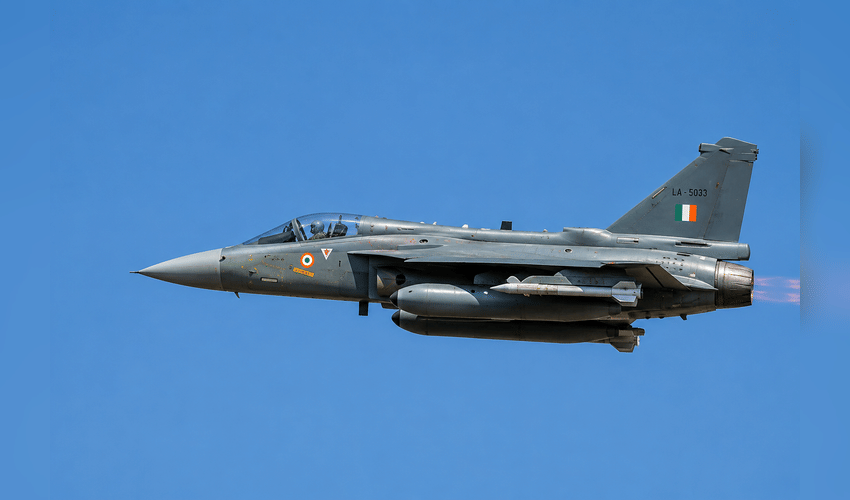

India's indigenous defence aviation programme is moving closer to a major milestone as the Tejas Mk-2, the country’s next-generation multirole fighter aircraft, progresses through development. Designed as a significant evolution of the Tejas Light Combat Aircraft (LCA), the new platform is expected to offer enhanced range, payload, avionics and combat capability, positioning it alongside some of the world's leading 4.5-generation fighter jets.
Unlike the Tejas Mk-1A, the Mk-2 has been developed as a Medium Weight Fighter (MWF), featuring a larger airframe, more powerful engine, additional fuel capacity and expanded weapons carriage. Defence experts say the redesign reflects the Indian Air Force's growing need for a versatile aircraft capable of undertaking air superiority, ground attack, maritime strike and precision missions from a single platform.
The aircraft is being jointly developed by the Aeronautical Development Agency (ADA) and Hindustan Aeronautics Limited (HAL) as part of India's broader effort to modernise its fighter fleet while reducing dependence on foreign platforms. It is expected to eventually replace ageing fleets such as the Jaguar, Mirage 2000 and MiG-29, which are approaching the end of their operational lives.
One of the most notable upgrades is the integration of the General Electric F414 engine, which generates significantly more thrust than the F404 engine powering earlier Tejas variants. The additional power is expected to improve acceleration, payload capacity, operational range and overall combat performance. The aircraft is also designed with increased internal fuel storage, allowing longer missions with reduced reliance on aerial refuelling.
On the technology front, the Tejas Mk-2 is set to feature an Active Electronically Scanned Array (AESA) radar, advanced electronic warfare suite, infrared search and track (IRST) system, secure data links and sensor fusion capabilities. Together, these systems are intended to improve situational awareness, target tracking and survivability in modern battlefield environments. The cockpit has also undergone a major transformation. It is expected to feature a large-area digital display, side-stick controller and modern hands-on-throttle-and-stick (HOTAS) controls, reducing pilot workload while enhancing mission efficiency.
The fighter will be capable of carrying a broad mix of indigenous and imported weapons across multiple hardpoints, including beyond-visual-range air-to-air missiles, precision-guided bombs, anti-ship missiles and stand-off weapons. This flexibility is expected to make the aircraft suitable for a wide range of operational scenarios.
The Tejas Mk-2 is also a key pillar of India's defence self-reliance initiative. Officials have consistently emphasised increasing indigenous content in the aircraft through locally manufactured systems, avionics and weapons, while strengthening India's aerospace manufacturing ecosystem and supporting future defence exports. Development work continues as engineers complete prototype integration and ground testing. While earlier targets envisioned a maiden flight in 2026, recent reports indicate the programme timeline has been revised, with additional testing and systems integration extending the schedule before flight trials begin.
Once inducted into service, the Tejas Mk-2 is expected to become one of the Indian Air Force's principal combat aircraft, bridging the gap between the current Tejas fleet and India's future fifth-generation Advanced Medium Combat Aircraft (AMCA). Defence analysts believe the programme represents a crucial step in India's long-term objective of developing advanced indigenous combat aviation capabilities while reducing reliance on imported fighter platforms.



