



Military
India rejects China's renaming of places in Arunachal, citing impact on ties.
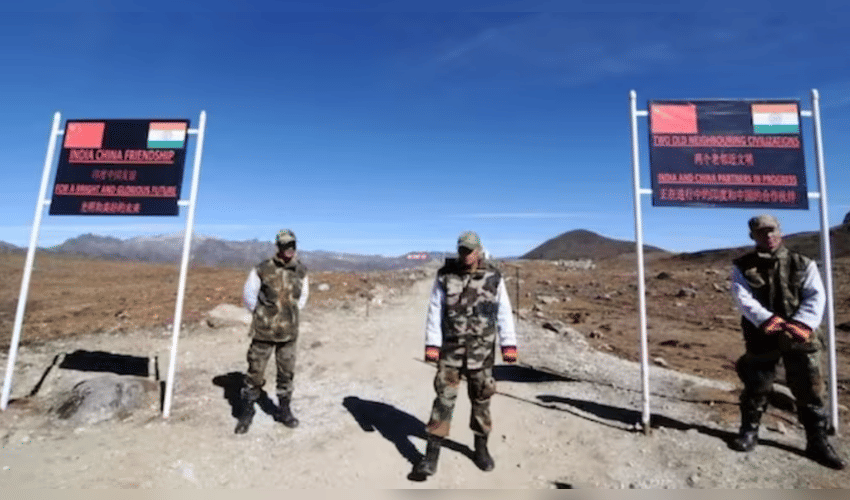

India on Sunday reiterated its strong opposition to China’s continued attempts to assign what it described as “fictitious names” to locations within Indian territory, stating that such actions are aimed at creating “baseless narratives” and do not alter the ground reality. However, New Delhi also warned that these moves could negatively affect ongoing efforts to stabilise and normalise bilateral relations between the two countries.
Responding to media queries, External Affairs Ministry spokesperson Randhir Jaiswal said that India “categorically rejects” any such “mischievous attempts” by the Chinese side. He stressed that renaming places that are an integral part of India does not lend legitimacy to China’s claims. According to him, these efforts are not only unfounded but also misleading, as they seek to distort facts through repeated assertions.
Jaiswal further underlined that regions such as Arunachal Pradesh have always been, and will continue to remain, an inseparable and inalienable part of India. He made it clear that no amount of renaming or narrative-building by China can change this established reality. At the same time, he cautioned that such actions by Beijing risk undermining the fragile progress made in improving ties between the two nations.
India has previously reacted strongly to similar moves by China, including instances in May last year and April 2024, when lists of renamed places were released. Despite repeated objections, China has continued this practice over the years, issuing multiple lists since 2017 under the name “Zangnan,” which it uses to refer to Arunachal Pradesh.
The broader context of these tensions lies in the strained relationship between the two countries following the 2020 eastern Ladakh border standoff. Although both sides have taken steps in recent months to rebuild trust and restore stability, such developments threaten to derail those efforts. India has urged China to avoid actions that could inject further negativity into the relationship and instead work towards mutual understanding and cooperation.



