



Economy
India Advised to Maintain Strong Position as US Trade Negotiations Continue: SBI Ecowrap
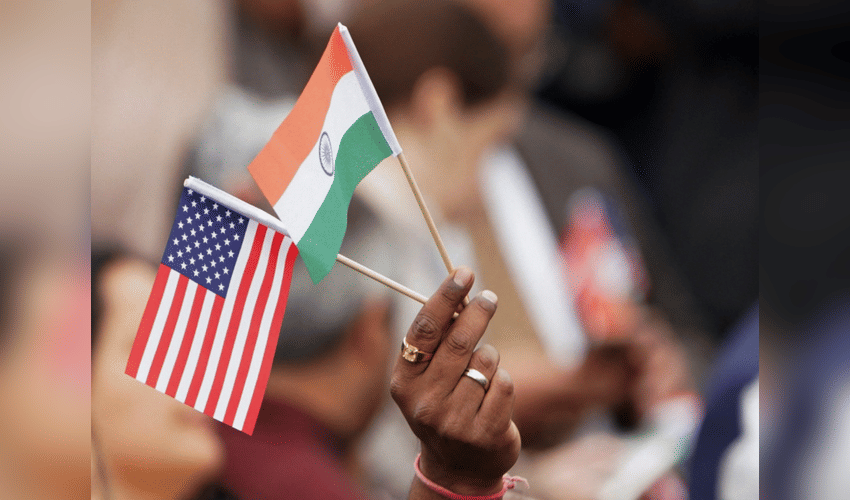

India should take a measured approach in its ongoing trade negotiations with the United States and avoid making premature concessions, according to the latest SBI Ecowrap report released on Friday. The report argues that Washington's current negotiation strategy relies on creating uncertainty and linking multiple policy issues to strengthen its bargaining position. According to the research, the US administration has increasingly adopted uncertainty as a diplomatic and economic tool across several global issues, including trade, NATO, Iran, China, Greenland, and its engagement with India. The report suggests that by keeping its negotiating intentions deliberately unclear, Washington gains additional leverage during discussions.
Using concepts from game theory, SBI Ecowrap explains that the US seeks to maintain "incomplete information" about its bargaining approach, making it more difficult for negotiating partners to predict its next move or final objectives. The report describes India as occupying a strategically significant position in the changing global order. Unlike NATO allies, which depend heavily on American security guarantees, or China, which holds considerable influence through manufacturing, critical minerals, and supply chains, India possesses a different but equally important set of strengths.
These include its vast consumer market, skilled technology workforce, globally competitive pharmaceutical industry, growing defence partnerships, diversified energy options, influential diaspora, and its strategic role in the Indo-Pacific region. Given these advantages, SBI Research believes India should avoid yielding to pressure for quick agreements. Instead, it recommends allowing the US negotiating stance to evolve as domestic economic pressures, geopolitical priorities, and alliance-related challenges begin influencing Washington's calculations.
The report advises India to maintain constructive engagement while refraining from public confrontations. Rather than weakening bilateral ties, it suggests India should remain patient, make only limited and reversible commitments, and allow the US to confront the domestic consequences of its own opening demands. SBI Ecowrap further recommends that India should be prepared to test Washington's determination, even if doing so results in some short-term economic costs. The report argues that such patience could ultimately improve India's negotiating position and lead to more balanced outcomes over the long term.
Beyond the India-US trade relationship, the report examines what it sees as a broader shift in America's negotiating style. It notes that Washington increasingly combines trade, defence, strategic resources, diplomacy, and security into a single framework rather than treating each issue independently.
According to the report, the US often begins negotiations by announcing strong tariff measures or policy proposals, closely monitoring reactions from financial markets and partner governments before modifying or sequencing its final decisions. The report also cites NATO as an example of this approach. It argues that the US has increasingly linked defence spending commitments with wider political and strategic alignment, making long-standing security guarantees more conditional than before.
Spain's recent reservations regarding NATO's updated defence spending targets are highlighted as an illustration of how defence budgets are being viewed not merely as financial commitments but also as indicators of broader political support for US strategic objectives. SBI Research observes that this negotiating model allows Washington to use progress in one policy area—such as defence spending—to influence outcomes in others, including trade and diplomacy.
While acknowledging that this strategy may provide the US with short-term negotiating advantages, the report cautions that repeatedly relying on uncertainty could weaken long-term trust among allies, partners, and global markets. SBI Ecowrap recommends that India continue engaging constructively with the United States while preserving its negotiating leverage. By capitalising on its expanding economic strength and growing geopolitical importance, India, the report argues, can position itself for more favourable outcomes as the broader strategic environment evolves.



