



Military
IAF Shares Footage of Rafale Equipped with Meteor Beyond-Visual-Range Missile, Quiets Skeptics
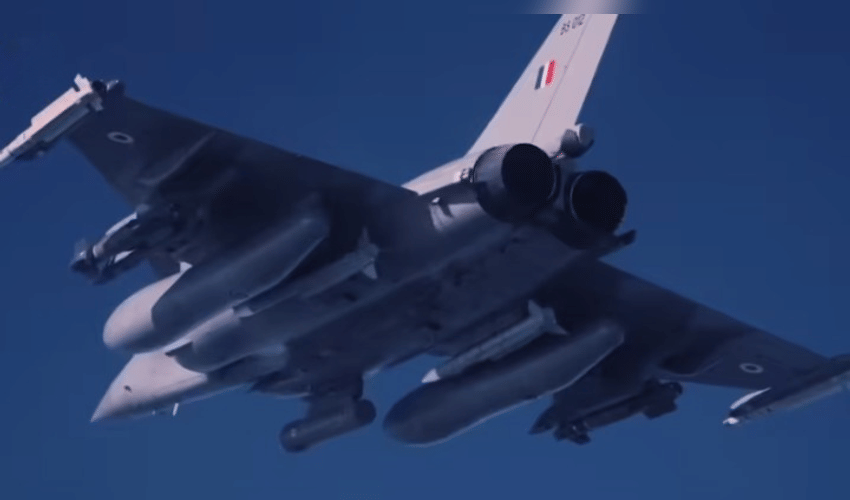

The Indian Air Force (IAF) released striking video footage on republic day showcasing its advanced fighter jets armed with sophisticated weaponry, including the beyond-visual-range (BVR) Meteor missile. The release directly addresses persistent scepticism from Pakistan and some Western critics, who questioned India’s possession and operational use of the Meteor during key events such as the 2019 Balakot strikes and last year’s Operation Sindoor.
The footage, shared on X, highlights the fully armed hardpoints of French-acquired Rafale jets, Sukhoi fighters, and indigenous TEJAS aircraft. It showcases a variety of potent missiles, including the Meteor and BrahMos, both reportedly deployed against Pakistani targets during Operation Sindoor. This release puts an end to months of speculation surrounding India’s missile capabilities.
Central to the attention is the Meteor missile, a next-generation BVR air-to-air weapon designed to redefine modern aerial combat. Capable of multi-target engagements, it can neutralize agile fighter jets, UAVs, and cruise missiles even in heavily contested electronic environments. Its solid-fuelled ramjet engine propels it beyond Mach 4, providing sustained thrust and mid-course acceleration over distances exceeding 200 kilometres. This creates the largest “no-escape zone” among air-to-air missiles, while its fragmentation warhead maximizes target destruction.
India acquired the Meteor as part of a September 2016 deal with France for 36 Rafale fighters worth €7.87 billion, which also included advanced missiles like Meteor and Scalp, along with India-specific enhancements to the jets’ weapons systems. Despite the acquisition, critics doubted that India had actually received operational Meteor missiles. The IAF’s latest video provides clear visual proof of their integration on active platforms.
The footage shows a TEJAS Light Combat Aircraft successfully firing a Meteor missile, highlighting the indigenous jet’s compatibility with cutting-edge armaments. Other clips feature fully armed Mirage-2000 aircraft, the same model used in the 2019 Balakot precision strikes deep within Pakistan. The video also displays Rampage air-to-surface missiles, known for high-accuracy strikes in contested environments. IAF Sukhoi Su-30MKI fighters carried Rampage munitions during Operation Sindoor, further enhancing India’s strike capabilities. This Republic Day release underscores the IAF’s technological edge while sending a strategic signal amid regional tensions. It reinforces confidence in both indigenous and imported systems and debunks claims aimed at undermining India’s military strength.
Operation Sindoor, referenced in the footage, marked a significant escalation in India-Pakistan tensions, with these missiles reportedly inflicting substantial damage. Earlier criticisms, often based on Pakistan’s denial of losses post-Balakot, questioned India’s missile inventory and effectiveness—claims now conclusively disproven.
The Meteor’s ramjet propulsion distinguishes it from conventional rocket-powered missiles, maintaining velocity over long distances and creating a near-impossible-to-escape interception zone. Integrated with the Rafale’s advanced radar and electronic warfare systems, the missile’s lethality is further enhanced. The 2016 Rafale deal ensured operational training and seamless integration for India.
The demonstration of Meteor on TEJAS highlights DRDO and HAL’s progress in equipping indigenous platforms with world-class weaponry, reflecting India’s “Make in India” defence vision. Meanwhile, Sukhoi-30MKIs demonstrate versatility, pairing Rampage with BrahMos for multi-role strike missions. Rampage’s stand-off range and GPS/INS guidance allow low-observable penetration of hostile airspace.
Releasing this video on Republic Day amplifies its symbolic impact, countering misinformation about India-Pakistan aerial operations since 2019. Western scepticism, though more muted, mirrored Pakistani narratives questioning Balakot’s effectiveness. The IAF’s evidence—fully loaded hardpoints and missile firing sequences—leaves little doubt.The revelation may pave the way for further integrations, such as deploying Meteor on additional platforms or extending its range. It strengthens India’s deterrence posture and highlights a maturing air arsenal prepared for 21st-century threats, in line with ongoing developments like TEJAS MK-2, AMCA stealth fighters, and the Gaganyaan program.



