



World
Frederick Wiseman, a groundbreaking documentary filmmaker, has passed away at 96.
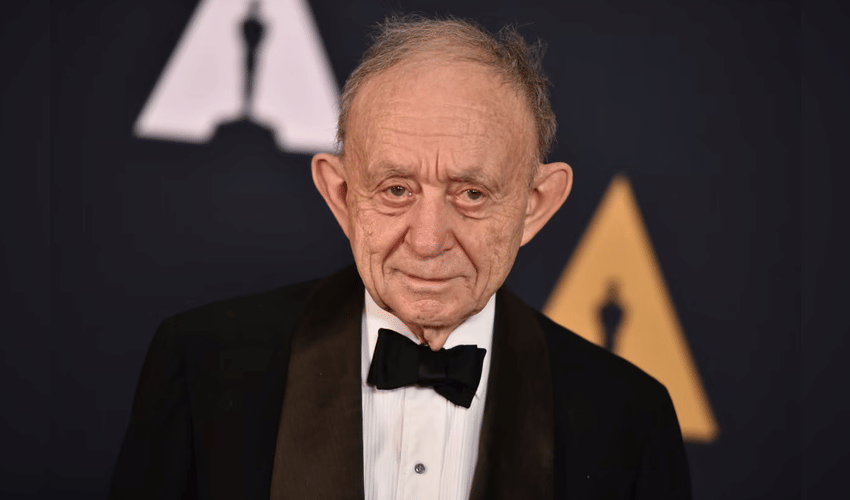

Frederick Wiseman, the acclaimed director behind Titicut Follies and more than three dozen documentaries that offered a powerful and unfiltered examination of American institutions, has died at the age of 96. His passing was confirmed in a joint statement issued by his family and his production company, Zipporah Films. No further information was immediately provided, though it was confirmed that he died on Monday. The statement noted that he would be greatly missed by loved ones, collaborators, and the many filmmakers and audiences worldwide who were influenced by his distinctive artistic vision.
Widely regarded as one of the most respected and influential documentary filmmakers, Wiseman received an honorary Academy Award in 2016 and created over 35 documentaries, some spanning several hours. Although he did not direct his first feature-length film until his mid-30s, he quickly became a leading figure in modern documentary cinema, often compared with pioneers such as D. A. Pennebaker and Robert Drew.
Beginning with films like High School and the controversial Titicut Follies, Wiseman developed a subtle yet powerful observational style. Working with extremely small crews and often handling sound recording himself, he produced films that drew praise, debate, and legal controversy. Titicut Follies, in particular, faced extended legal restrictions due to its disturbing portrayal of conditions at a Massachusetts hospital for the criminally insane.
Wiseman explained that he never intended to provoke audiences, but acknowledged that the content of his films often challenged people’s assumptions. His goal was to explore different dimensions of American life, reflected in straightforward titles such as Hospital, Public Housing, Basic Training, and Boxing Gym. Through these works, he examined both institutional systems and the human experiences within them.
He described institutions as frameworks for observing human behavior, emphasizing that his films focused equally on individuals and the environments shaping them. His documentaries avoided narration, music scores, and traditional storytelling devices. Although often associated with the cinema verite movement, Wiseman rejected the label, considering it meaningless.
Despite being described by filmmaker Errol Morris as a leading figure in bleak cinematic observation, Wiseman saw himself as a fair and thoughtful observer rather than a critic seeking to expose wrongdoing. He believed in documenting both compassion and cruelty, highlighting the full spectrum of human experience. Much of his work was produced through Zipporah Films, named after his wife, who passed away in 2021. The couple had two children.
Born in Boston, Wiseman grew up in an intellectually rich environment. His father was a prominent lawyer, and his mother worked in a psychiatric ward while nurturing her interest in acting. He attended Williams College and Yale Law School and later worked in various legal and academic roles, including serving in the Army and teaching law.
His filmmaking career began after producing a 1964 adaptation of William Miller’s novel The Cool World. Inspired by his visits to the Bridgewater State Hospital while teaching law, he eventually created Titicut Follies, which sparked legal battles over prisoner privacy. The film remained restricted for more than two decades before those limitations were fully lifted in 1991. Throughout his career, Wiseman remained committed to capturing the complexity of human life, creating documentaries that continue to shape the understanding of institutions and society.



