



Asia In News
Former Envoy Questions Pakistan's Ties With US and China After Military's 'Kaafirs' Remark
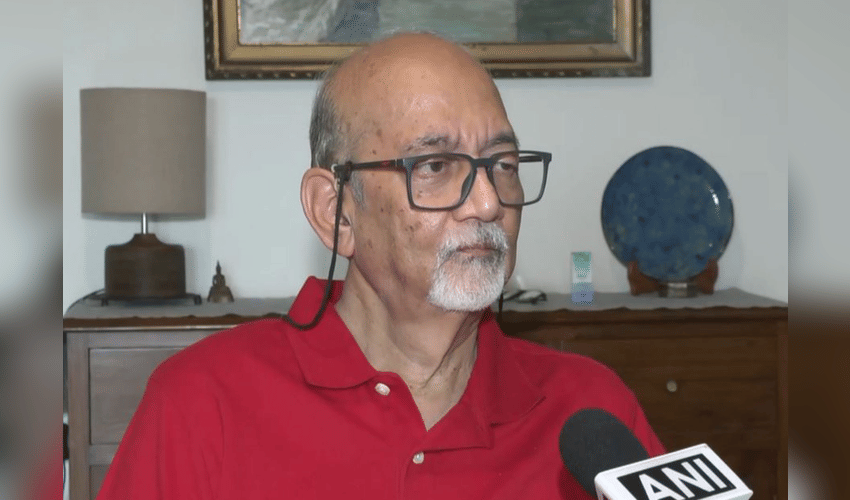

Former Indian Ambassador to Iran Dinkar P. Srivastava has strongly criticised Pakistan's military over its recent religious remarks concerning India-Afghanistan relations, questioning how Islamabad reconciles such statements with its longstanding strategic ties with the United States and China. His comments came in response to Pakistan Armed Forces spokesperson Lt Gen Ahmed Sharif Chaudhry, who cited a verse from the Quran while discussing India-Afghanistan ties. Chaudhry suggested that Muslims who form friendships with non-believers, or "kaafirs," are no longer considered true Muslims.
Reacting to the statement, Srivastava argued that such an interpretation raises uncomfortable questions about Pakistan's own diplomatic relationships. "The Director General of ISPR has interpreted a Quranic verse to suggest that Muslims who maintain ties with non-Muslims are not genuine Muslims. If that is the case, how does Pakistan justify its close relationships with countries like the US and China?" he said.
He further noted that Pakistan has relied on major global powers throughout its history, first maintaining close ties with Britain and the United States, and later becoming one of China's closest strategic partners over the past several decades. "Since its creation, Pakistan has remained under the influence of Western powers and, for the last 30 to 40 years, has been closely aligned with China, a communist nation. By the same reasoning, what does that imply about the Pakistan Army?" Srivastava asked.
Turning to Pakistan's ties with Afghanistan, the former envoy said tensions between the two neighbours stem from Islamabad's long-standing approach toward Kabul. He pointed out that Afghanistan was the only country to oppose Pakistan's admission to the United Nations in 1947, and successive Afghan governments—including the current Taliban administration—have maintained strained relations with Islamabad.
According to Srivastava, Pakistan's tendency to treat Afghanistan as though it were under its influence has fuelled resentment over the years. Former Indian diplomat Veena Sikri also criticised Pakistan's handling of its relationship with Afghanistan, arguing that Islamabad has failed to understand the country's evolving political landscape.
She said Pakistan has struggled to build stable ties with the Taliban government despite years of engagement and urged both countries to resolve their differences through direct dialogue rather than shifting responsibility onto India. "Pakistan and Afghanistan need to engage with each other, reach common ground, and stop blaming India for their own shortcomings in managing relations with their neighbours," Sikri said.
The debate follows remarks by Lt Gen Ahmed Sharif Chaudhry, who invoked a Quranic verse while responding to questions about India-Afghanistan relations. He stated that Muslims should not befriend "kaafirs" (non-believers), adding that those who do are no longer regarded as Muslims—a statement that has sparked widespread discussion and criticism.



