



Military
DRDO Launches QRSAM-ER Programme to Extend India's Tactical Air Defence Range
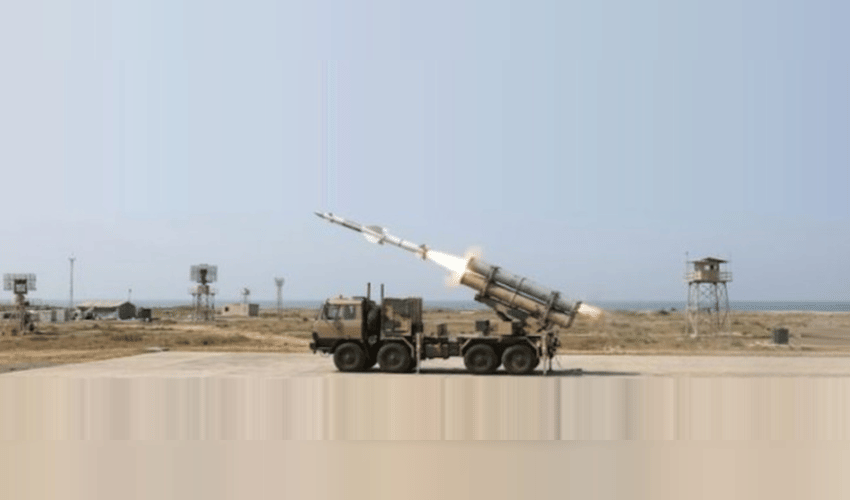

The Defence Research and Development Organisation (DRDO) has reportedly initiated work on an extended-range version of India’s Quick Reaction Surface-to-Air Missile (QRSAM) system, in a move aimed at strengthening the country’s tactical air-defence capabilities. The new programme, referred to as QRSAM-ER, is expected to build on the technologies developed for the existing QRSAM system while seeking to increase its engagement range. The initiative comes as India continues to expand its indigenous air-defence network in response to the growing use of drones, cruise missiles, aircraft and other aerial threats.
QRSAM was developed primarily to provide mobile air-defence cover to Indian Army formations operating in battlefield environments. The system is designed to accompany mechanised and mobile units rather than remain permanently deployed at a fixed location. The existing QRSAM missile is publicly associated with an engagement range of up to around 30 kilometres. Its mobile architecture combines missile launchers with surveillance and tracking radars, enabling the system to detect and engage aerial targets while supporting highly mobile military formations.
An extended-range variant could significantly increase the area that a QRSAM battery can potentially protect. However, the precise range and technical specifications of QRSAM-ER have not yet been officially detailed by DRDO, meaning claims about its eventual performance should be treated cautiously. The development is nevertheless significant because extending the range of a surface-to-air missile involves several technological challenges. A longer-range missile requires appropriate propulsion, guidance, flight-control and seeker capabilities to maintain accuracy throughout a longer engagement.
The proposed system would also fit into India's broader layered air-defence strategy. The country is developing air-defence systems covering different engagement ranges, with mobile tactical systems such as QRSAM intended to protect frontline formations and longer-range programmes being developed to deal with threats farther away.
This layered approach has become increasingly important as the modern battlefield has become more complex. Conventional aircraft are now joined by unmanned aerial vehicles, loitering munitions and cruise missiles, creating a requirement for air-defence systems that can respond quickly and operate in different environments.
For the Indian Army, mobility remains one of QRSAM's most important characteristics. A tactical air-defence system that can move alongside combat formations can provide protection without forcing frontline units to depend entirely on fixed defensive installations. The development of QRSAM-ER could therefore give commanders a larger defensive envelope while retaining the mobile character of the existing system. If successfully developed and inducted, it could help reduce gaps between different layers of India's air-defence architecture.
The programme also carries importance for India's defence-indigenisation drive. QRSAM has been developed through India's domestic defence research and industrial ecosystem, with DRDO working alongside Indian defence companies involved in missile, radar and launcher technologies. Developing an extended-range derivative could allow India to build further on these established capabilities.
The success of QRSAM-ER will ultimately depend on more than missile range alone. Modern air defence requires an integrated combination of sensors, command-and-control networks, electronic warfare resilience, rapid target identification and the ability to engage multiple threats under difficult battlefield conditions. QRSAM-ER remains a developing programme, and further information from DRDO or the Ministry of Defence will be needed to establish its final specifications, testing schedule and induction timeline. If the programme progresses as planned, the extended-range QRSAM could become an important addition to India's indigenous tactical air-defence inventory, giving mobile Army formations a potentially wider protective shield against evolving aerial threats.



