



Asia In News
China's Experimental Maglev Train Hits 800 km/h in Just 5.3 Seconds
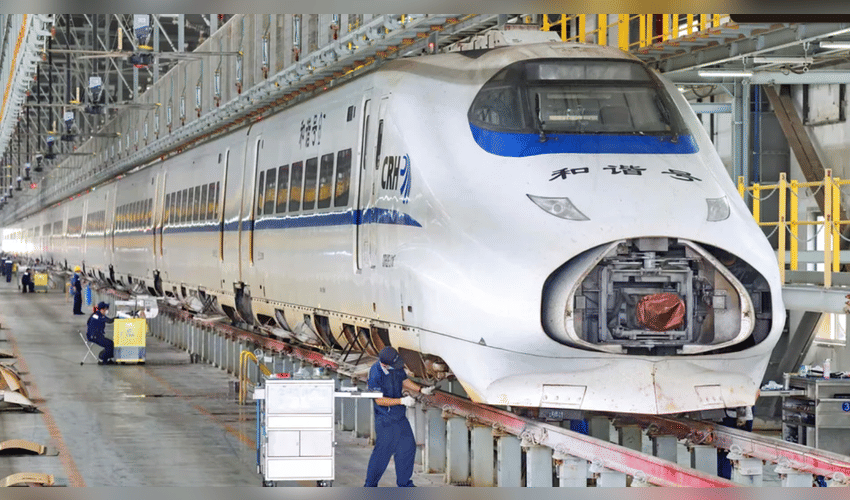

China has set a new benchmark in high-speed transportation after an experimental magnetic-levitation vehicle accelerated from zero to 800 km/h in only 5.3 seconds. The record-setting test was carried out at the Donghu Laboratory in Hubei province, where researchers are developing next-generation maglev technology. The experimental vehicle, which weighs around 1.1 tonnes, was tested on a specially built track measuring about one kilometre.
During the test, the vehicle rapidly accelerated to 800 km/h, or roughly 497 mph, before being brought under control. Researchers reportedly managed to stop the vehicle over a distance of around 200 metres, demonstrating the precision required to operate the system at extremely high speeds. The achievement is particularly notable because of the short distance available for the test. Reaching such a speed within seconds requires enormous electromagnetic power as well as highly accurate control of levitation, propulsion and braking systems.
The latest result builds on a series of previous experiments conducted by the same research programme. Earlier tests had demonstrated speeds of approximately 650 km/h and 700 km/h, with researchers progressively pushing the limits of the experimental system. Despite the dramatic “bullet train” headlines surrounding the achievement, the vehicle is not a passenger train currently designed to carry people at 800 km/h. It is a relatively small experimental platform being used to test technologies that could eventually contribute to future high-speed transportation.
Maglev systems work differently from conventional trains. Instead of relying entirely on wheels and steel rails, magnetic forces are used to lift and propel the vehicle. This dramatically reduces traditional rolling friction, although aerodynamic resistance and other engineering challenges become increasingly important as speeds rise.
The technology could have applications beyond passenger rail as well. Researchers are studying high-speed electromagnetic propulsion for possible future transportation and aerospace-related systems. China has already developed an extensive high-speed railway network and has invested heavily in maglev research. The latest 800 km/h experiment reflects the country's broader effort to develop transportation technologies capable of operating at speeds far beyond today's conventional rail systems.
For passengers, however, an 800 km/h train is still some distance away. Turning a laboratory demonstration into a practical commercial service would require major advances in infrastructure, energy efficiency, safety, passenger comfort and operating costs. The ability to accelerate an experimental vehicle to 800 km/h in just 5.3 seconds marks a significant engineering achievement and offers a glimpse into the possibilities of ultra-high-speed transportation.



