



Asia In News
Canada's FM Anita Anand Visits Pakistan After Two Decades, Islamabad Seeks Backing on Indus Waters Treaty
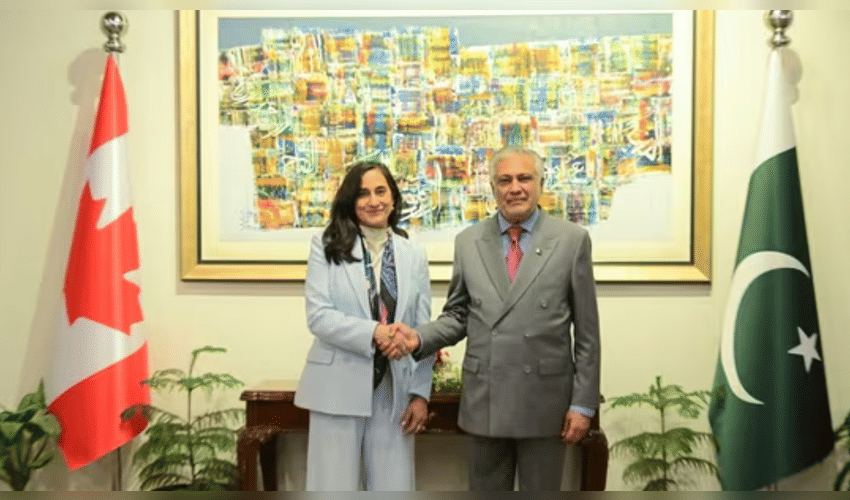

Canadian Foreign Minister Anita Anand arrived in Pakistan on Monday for a one-day official visit, marking the first trip by a Canadian foreign minister to the country in nearly 20 years. The visit focused on strengthening bilateral ties, but Pakistan also used the occasion to seek Canada's support for the restoration of the Indus Waters Treaty (IWT), which has remained suspended by India since 2025.
During talks in Islamabad, Pakistan's Deputy Prime Minister and Foreign Minister Ishaq Dar urged Ottawa to support what he described as the immediate restoration of the decades-old water-sharing agreement between India and Pakistan. Dar also raised concerns over what Pakistan called the "weaponisation of water," arguing that the treaty should continue to be upheld under international law.
India placed the Indus Waters Treaty in abeyance following the April 2025 Pahalgam terror attack, in which 26 civilians were killed. New Delhi blamed Pakistan-based terrorist groups for the attack and later launched Operation Sindoor targeting terror infrastructure across the border. Since then, India has maintained that national security concerns justified its decision to suspend the treaty.
Besides the water-sharing issue, the two foreign ministers discussed a broad range of bilateral and regional matters, including trade, investment, security cooperation, developments in Afghanistan, and counterterrorism. Pakistan also reiterated its position on the Kashmir issue during the discussions.
Speaking after the meeting, Anand described the visit as an important milestone in Canada-Pakistan relations. She noted that it was the first visit by a Canadian foreign minister to Pakistan in almost two decades and stressed the need to expand cooperation across multiple sectors, including economic development and regional stability.
Economic engagement featured prominently in the discussions. Both sides agreed to deepen cooperation in trade, investment, agriculture, mining, critical minerals, energy, infrastructure, and information technology. Pakistan also invited greater Canadian investment in these sectors, while the two countries committed to maintaining regular bilateral consultations to strengthen institutional cooperation. Canada also announced more than $47 million in assistance for security and development initiatives in Pakistan, underscoring Ottawa's intention to broaden engagement beyond diplomacy and trade.
The Indus Waters Treaty, signed in 1960 with the World Bank as a mediator, governs the sharing of water from the Indus river system between India and Pakistan. For decades, it has been regarded as one of the world's most durable transboundary water agreements despite periods of conflict between the two neighbours. However, its suspension following the 2025 terror attack has added a new dimension to already strained India-Pakistan relations.
While Pakistan sought international backing on the treaty issue during Anand's visit, Canada did not publicly indicate any change in its position. Instead, Ottawa's statements remained focused on enhancing bilateral cooperation, expanding economic partnerships, and maintaining dialogue on regional security. Anand's visit nevertheless represents a notable step in reviving high-level diplomatic engagement between Canada and Pakistan after nearly two decades, reflecting both countries' interest in expanding cooperation despite the complex geopolitical challenges facing South Asia.



