



News
Bangladesh Votes Amid Islamist Resurgence, Jamaat-e-Islam's Rise Sparks Secularism Concerns
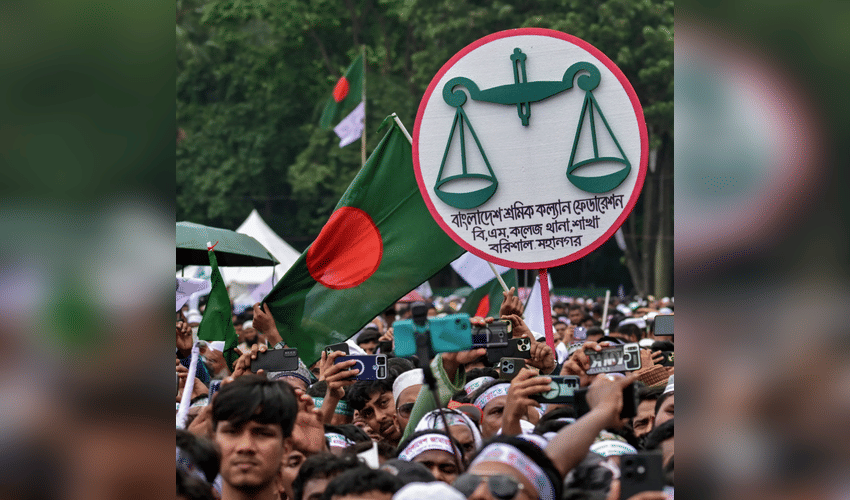

As Bangladesh heads to the polls on February 12, a significant undercurrent shaping this election is the visible resurgence of Bangladesh Jamaat-e-Islami, a party once politically marginalised but now regaining strength and influence.
While the Bangladesh Nationalist Party (BNP) is widely expected to emerge as the leading force in the parliamentary contest, political observers say the growing prominence of Jamaat-e-Islami represents a deeper ideological shift that could have long-term implications for the country’s secular framework and regional posture.
Jamaat, which faced years of political isolation and legal challenges during the Sheikh Hasina era, appears to have re-emerged with renewed confidence. After spending much of the past decade on the defensive including a period of effective political exile from 2013 until last year the party has returned to the campaign trail with a more assertive tone. Its rhetoric has openly reflected hardline Islamist positions, particularly on issues related to women’s rights, governance and the role of religion in public life.
Critics argue that such positions threaten the secular foundations embedded in Bangladesh’s constitution and social fabric. The country, once widely regarded for balancing its Muslim-majority identity with a strong secular and pluralistic ethos, now faces renewed debate over the direction of its political and cultural trajectory.
Concerns have also emerged over Jamaat’s stance toward India. The party has historically maintained a confrontational posture toward New Delhi, and analysts warn that an expanded political footprint for Jamaat could complicate Dhaka’s diplomatic balancing act in South Asia.
Bangladesh’s political landscape has undergone significant transformation since the dramatic upheaval that followed Sheikh Hasina’s departure. The weakening of the Awami League’s dominance has created space for opposition forces and ideological realignments. In that vacuum, Jamaat appears to have capitalised on organisational discipline, grassroots networks and a narrative centred on religious identity and governance reform.
Even if the BNP secures a parliamentary majority, observers caution that the growing mainstream acceptance of Jamaat’s ideology may reshape coalition politics and policy debates. The concern, analysts say, is not merely about seat counts but about the broader normalisation of hardline Islamist narratives within national discourse.
For many voters, this election is about stability, economic recovery and democratic renewal after years of turbulence. Yet beneath those priorities lies a deeper question: whether Bangladesh will reaffirm its secular democratic identity or continue drifting toward a more overtly religion-driven political order. As ballots are cast, the outcome may not only determine who governs but also signal the ideological direction of the nation in the years ahead.
This image is taken from Al jazeera.



