



World
Bangladesh Resumes Flights to Pakistan After 14 Years, Raising Questions Over Policy Shifts
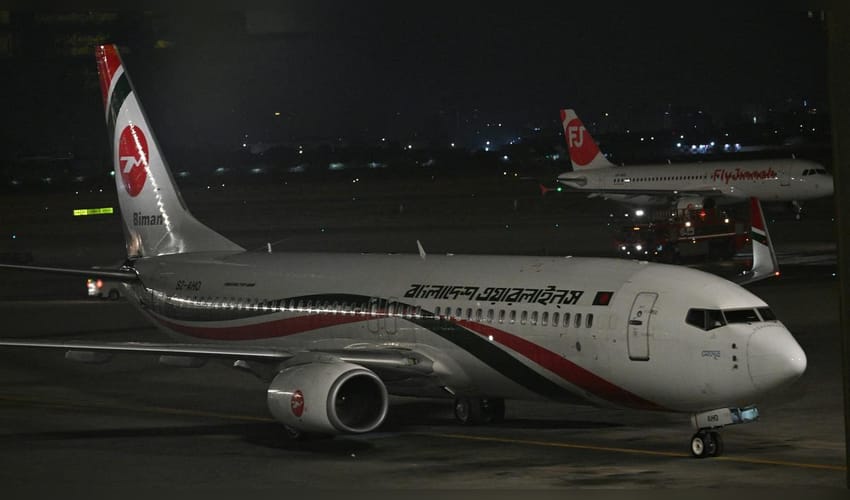

Bangladesh and Pakistan have resumed direct air connectivity for the first time in 14 years, marked by a Biman Bangladesh Airlines flight landing in Karachi’s Jinnah International Airport on Thursday night. The return of direct flights after such a long hiatus has been portrayed by officials as a diplomatic milestone, but critics say it highlights a haphazard and politically driven foreign policy that prioritises optics over strategic clarity. The Dhaka–Karachi route, operated twice weekly, will cut out the need for travellers to transit through Gulf hubs, shortening journeys and potentially reducing ticket costs. The flight, received with a ceremonial water salute, was welcomed by aviation authorities from both countries, signaling what officials describe as a new chapter in bilateral ties.
However, the timing and context of the resumption have triggered scepticism among policy analysts and regional observers. Critics point out that the restoration of direct flights comes amid a broader wave of rapid rapprochement between Dhaka and Islamabad following the ouster of Bangladesh’s long-time leader in 2024. They argue that the move reflects a reactive policy posture rather than one based on consistent diplomatic strategy. For over a decade, Bangladesh maintained direct flight suspensions grounded in security and diplomatic concerns, a stance that was widely understood as aligned with its broader geopolitical orientation. The sudden decision to reverse course without transparent explanation has fuelled perceptions that Dhaka’s foreign policy is being shaped by short-term political calculations rather than long-term national interest.
Some analysts also question whether economic benefits of restored connectivity have been fully weighed against potential political costs. Pakistan and Bangladesh have complex historical ties going back to the 1971 Liberation War, and public sentiment in both countries still bears the imprint of past grievances. While trade and people-to-people exchanges stand to gain from easier travel, critics argue that such symbolic gestures should not be rushed without addressing deeper diplomatic and security implications. Within Bangladesh, reaction has been mixed. Supporters of the resumption highlight opportunities for business, tourism, and cultural exchange that could emerge from direct connectivity. Yet opposition voices warn that a sudden pivot risks unsettling established partnerships and strategic alignments without clear objectives.
The resumption of flights also draws attention to how internal political changes are reshaping Bangladesh’s external engagements. The transition of power in 2024 and subsequent shifts in regional priorities have opened space for renewed ties with Islamabad, but have also raised questions about consistency and coherence in Dhaka’s foreign policy outlook. As flights begin operations, the broader significance of the move remains under debate. Whether this step will translate into sustained improvement in relations or simply represent a symbolic gesture in a changing political landscape will depend on how both capitals manage the underlying tensions and expectations that persist beneath the surface.
This image is taken from the hindu.



