



World
Baloch Insurgents Claim Deadly Attacks That Exposed Pakistan's Security Failures
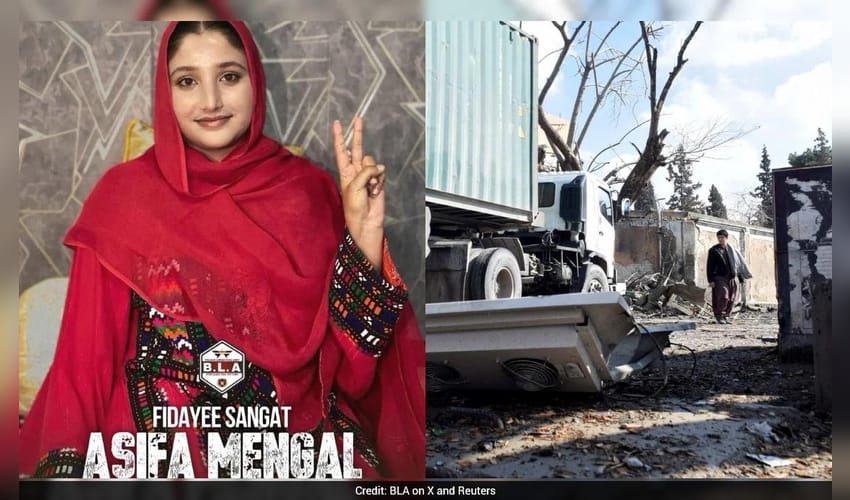

A wave of coordinated attacks by Baloch separatist militants has once again laid bare the deepening security crisis in Pakistan, with the outlawed Balochistan Liberation Army (BLA) claiming responsibility for a series of strikes it says killed more than 200 Pakistani security personnel and captured hostages in a dramatic escalation of violence. According to the militant group’s own statements, the offensive — dubbed “Operation Herof Phase II” was conducted across numerous districts in the southwestern province of Balochistan over an extended period of fighting. The BLA asserted that its fighters struck military targets, police, paramilitary units and administrative installations, using improvised explosive devices (IEDs), suicide attacks and coordinated assaults to inflict heavy losses on state forces.
While independent verification of the BLA’s specific casualty claims could not be confirmed, official data from provincial authorities acknowledged dozens of deaths among security personnel and civilians during the clashes. Local leaders reported that at least 17 law enforcement members and 31 civilians were killed in the initial assaults, underscoring how the violence has affected both frontline forces and ordinary residents. Pakistan’s security forces responded with intense counter-operations, reporting the killing of dozens of militants in the ensuing clashes. Authorities said that a significant number of insurgents were killed or neutralised in clearance operations, reflecting one of the most intense escalations of the decades-long insurgency in Balochistan.
What has particularly drawn international attention is the involvement of female fighters among the BLA’s ranks, including so-called “fidayeen” operatives suicide attackers committed to carrying out high-impact missions. The release of images and claims about such individuals highlighted the group’s effort to amplify its propaganda and project an image of resolve and tactical sophistication. Security analysts say the scale and coordination of the attacks point to serious shortcomings in Pakistan’s ability to maintain control over its largest and poorest province, where grievances over political marginalisation, lack of economic development and heavy-handed governance have fuelled long-running separatist sentiment. They note that coordinated assaults on multiple fronts, including prisons and security installations, represent a sharp escalation in insurgent capability.
The unrest has further underscored the limitations of Pakistan’s militarised approach to what is fundamentally a political and socio-economic conflict. Instead of addressing underlying grievances through dialogue and development, repeated reliance on force has perpetuated cycles of violence that claim lives on all sides and undermine long-term stability. Critics argue that Islamabad’s persistent narrative blaming foreign interference detracts from the real causes of unrest, which include perceived economic neglect and ethnic marginalisation. Meanwhile, civilian casualties and security failures have eroded public confidence in the state’s capacity to provide safety and justice for its own people.
For many observers, this latest spate of violence is a stark reminder that Pakistan’s internal security architecture continues to struggle with insurgency not just as a military problem but as a symptom of deeper political dysfunction. As attacks and counter-operations continue, the human cost among both civilians and armed personnel is likely to rise, compounding a crisis that shows little sign of abating.
This image is taken from NDTV.