



World
All Roads Leading to Nepal: What Foreign Minister's Press Conference Reveals and What it Does Not

On Saturday, an eleven-member Indian technical team flew from Kathmandu to Chilime and Langtang and carried out an on-site reconnaissance of the flooded hydropower tunnels alongside the Nepali Army and the Armed Police Force. A six-member Chinese team landed in the Trishuli area by Chinese helicopter and began work with a Nepali Army unit at the Trishuli 3B tunnel. A South Korean team moved to the affected districts the same day. On that same Saturday, the Government of Nepal turned down a further Indian request to send a larger search and rescue contingent.
That’s how things are set up. Nepal has welcomed foreign assistance, and the story that it turned them away was just a bit of a simplification. Kathmandu has allowed four countries—India, China, Australia and South Korea—to focus on three main tasks: rescuing people inside the hydropower tunnels, analysing DNA and conducting forensic investigations. Anything else is kept out, and the door is gradually opened as the ground teams come up with new needs.
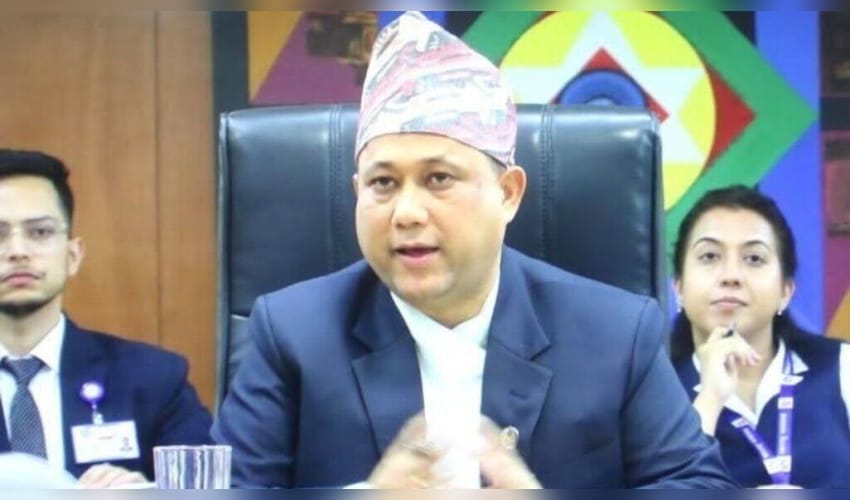
Shishir Khanal, Nepal's Minister for Foreign Affairs, set out the logic in his briefing on 29 August, three days after a glacier collapsed at around 5,200 metres, fell roughly 1,200 metres gathering rock and debris, and slammed into the Lende River, raising the Trishuli by nine metres in thirty minutes. His figures at the podium were 4,451 rescued including 187 foreign nationals, 626 bodies recovered, and about 2,400 unaccounted for. The reason for the narrow gate, he insisted, was terrain rather than politics.
Rasuwa is cut off by land, the only access to the worst-hit settlements is by helicopter through narrow gorges where even Nepali pilots "have to stand on a queue just to get through," and the riverbed has turned to swamp that will not take heavy equipment or, in places, a man on foot. The decision followed the advice of security personnel, he said, and behind it sits 2015, when competing foreign teams produced what one analyst has summarised as the chaos of huge teams "fanned out in different areas."
What Nepal asked for instead reads like a procurement list, and Khanal read it as one: opening the tunnel where workers are trapped, technology to locate people alive, rapid forensic and DNA capability, and mortuaries to hold the bodies. He was blunt about why. "Our own healthcare capacity is very limited to put these bodies in a frozen state," he said. "We have very limited forensic capability in Nepal."
The Word that Was Never Said
Read the transcript for what is absent and one omission is total. Across a briefing about a flood that originated upstream in Chinese territory, in a district that borders the Tibet Autonomous Region, Khanal does not once say Tibet. He says "the Nepal-China border area." He says "the Chinese authority," "the government of China," "our northern neighbour to China," and, when describing where the Chinese rescue teams were waiting to cross, "the northern side." The journalist who opened the questions did say it, noting that the affected zone "is not only in Tibet but also in other parts of the country." Khanal's answer routed around the word entirely and came back with institutions instead: a research partnership between the Chinese Academy of Sciences and Tribhuvan University, and a request to the world to treat the Himalayan cryosphere as a global problem.
This is not carelessness. It is the standard grammar of Nepali statecraft on its northern frontier, and it is doing work. International coverage of this disaster has settled on "the Nepal-Tibet border" as the routine descriptor. Beijing's own communications use Xizang. Kathmandu uses neither, because naming the upstream territory as Tibet invites a set of questions about sovereignty, refugees and Chinese sensitivity that a foreign minister running a body-recovery operation cannot afford to open. Dinesh Bhattarai, a former Nepali ambassador to the UN in Geneva, has suggested publicly that Rasuwa's location next to one of Beijing's most sensitive territorial questions may itself explain the reluctance to admit foreign teams, a reading Nepali officials reject. Whether or not Bhattarai is right about the cause, the briefing shows the sensitivity operating at the level of vocabulary, which is where it usually operates first.
The Asymmetry Khanal Conceded
The most telling part came when Dan Strunk from Bloomberg asked if there was really any information being shared with China. Khanal’s answer seemed pretty positive at first. He said that Beijing had been ‘very forthcoming with sharing information and data’, that coordination was ‘very, very close’ and that Chinese monitoring had spotted the risk from a new barrier lake forming after the collapse. But the really interesting bit is the explanation he gave: he said that China shares data because ‘they have better technological access than we do in that particular region’.
Nepal does not resent Chinese assistance but rather the circumstances that necessitate it. The foreign minister conceded that his government lacks the capacity to foresee the situation and that Nepal’s awareness of an impending flood is contingent on another state’s willingness to share this information. This admission is the most critical point in the briefing and is delivered with the utmost politeness.
Pressed on whether the cooperation predated the flood, Khanal went further and covered for the upstream side. "It looks like that even the Chinese side was, probably did not have that full information," he said, adding that neither authority had full clarity. On early warning, he confirmed there had been an agreement with China to build a mechanism and "active discussion" to set it up, "but unfortunately this incident happened."
That formulation deserves scrutiny, because Beijing has since told the story differently. The Chinese Embassy in Kathmandu issued a public notice on Saturday recording that a delegation from China's Ministry of Water Resources and the Xizang water resources department visited Nepal in May this year and made substantial progress with Nepal's Ministry of Energy, Water Resources and Irrigation and the NDRRMA on establishing a transboundary disaster information-sharing mechanism. Three months later the mechanism was still unbuilt, and the Chinese warning about the barrier lake reached Rasuwa officials on 28 August, two days after the flood rather than before it. Both governments are now describing the same unfinished file, one as an unfortunate interruption and the other as substantial progress. Neither description contains a date on which it will be finished.
India, Named and Capped
Khanal was warmer about India than about anyone else, and more specific. He gave the tonnage, "from India, we have already received more than 57 tons of relief materials," which has since risen past 68 tonnes across four Indian Air Force C-130 flights carrying a tunnel contingent, forensic experts for DNA analysis and relief supplies, with sixteen trucks of components for a 230-foot modular steel bridge on the ground and seven Bailey bridges to follow. He named the personal channels, a call with Jaishankar the previous day, and Modi speaking to Prime Minister Balendra Shah on the first day. He named the deployment: "An 11-member specialized technical reconnaissance team for tunnel rescue from India has been mobilized.
New Delhi has read the room considerably better than it did in 2015. Jaishankar has described the assistance as matched to Nepal's stated requirements, saying of the offers on the table, "Whatever they feel is appropriate, they will pick up for their needs." Operation Maitri and the backlash it generated taught India that visibility in Nepal is a cost, not a return. The result is that India is supplying more material than anyone and accepting a smaller footprint than it wants, with its NDRF offer refused once and then refused again on Saturday. There is also a quiet geography to the deployment that neither government has commented on. The Indian team went to Chilime and Langtang. The Chinese team went to Trishuli 3B. Nepal has put its two neighbours in the same disaster, in the same category of work, and in different tunnels.
What the Room Asked and What Was Given
The composition of the questions is worth recording, because it maps the story each constituency thinks it is covering. Bloomberg asked about the level of cooperation with China. Asahi Shimbun asked for a headline reconstruction figure and whether the Prime Minister would travel to Japan, China or India. A Japanese broadcaster asked after five missing Japanese nationals. Another questioner asked which foreign teams were being allowed in and which refused. The international press, in other words, arrived with a geopolitics story, an access story, a finance story and a nationals story.
The two most pressing questions regarding the impact of the flood on bodies were posed by Nepali journalists. Rabindra Bawa inquired about the arrival of refrigerated units noting that decomposition would be rapid in the prevailing humidity and received an answer that should have led the coverage: no specific commitments had been made at this stage options were being considered including freezer trucks. Pushpa Acharya from the government media asked about the hydropower workers still trapped and operators locked out of the unified helicopter command. The final Nepali questioner asked when the post-disaster needs assessment would be complete and whether a donor conference would be held on the 2015 model.
It is not that foreign correspondents do not care. It is that a disaster on the China border is seen as a problem with infrastructure and competition in other countries. But in Kathmandu, it is about whether a family will get their loved one back and whether the men in the Trishuli tunnels are safe. Khanal answered both questions, but the second one was more difficult because Nepal has not yet shared any news about it.
Development, Before and After the Bodies
The most forward-looking part of the briefing was also the most commercial, and it belongs in any assessment of Nepal's priorities. Khanal used his own platform to tell international media that Nepal is "mostly open," listing Kathmandu, Pokhara, Lumbini, Chitwan, Janakpur, the Annapurna and Everest regions, and arguing that "one of the best ways to build a resilient economy is not just a donation, but to support the core areas of economy." A country with 2,400 people unaccounted for spent part of its disaster briefing defending its tourist season, and it was right to, because the alternative is a second disaster in the balance of payments.
The same instinct governs the scientific register. Khanal transformed a question about fault lines into a claim on the international system, highlighting that Nepal contributes approximately 0.01 per cent of global greenhouse emissions while its people bear the consequences. This prompted a call for the world to treat the preservation of the Himalayan ecosystem as a collective obligation. Nepal intends to utilise research partnerships early warning mechanisms and climate finance as instruments for development before they are safety instruments. The immediate priority is to address the emergency. Reconstruction, tourism receipts and hydropower will then be the focus of the government’s efforts.
Khanal couldn’t provide a date for the post-disaster needs assessment. He confirmed that the foreign and finance ministries are discussing a donor conference at the ministerial level, with the aim of moving quickly. He estimated the reconstruction bill to be in the billions of dollars, covering 40-odd bridges and 15,000 damaged households. Both neighbours will bid for parts of it, and Nepal will ration the funds. The transboundary information-sharing mechanism that China’s embassy says made progress in May remains a file rather than a warning system on a river that caused a fatal glacial outburst flood in the same district in July 2025.
Disclaimer: This image is taken from Firstpost.



