



World
17 Point Agreement Returns To Spotlight As Tibetans Accuse China Of Betraying Promises
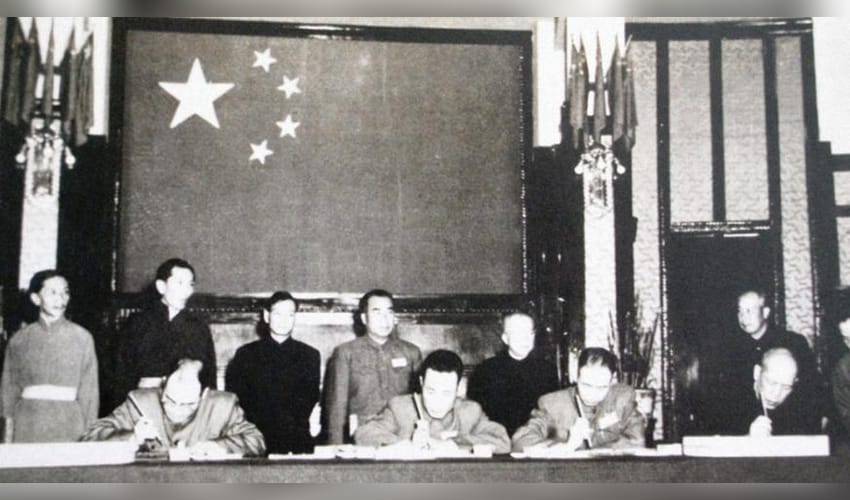

The controversial 17-Point Agreement between Tibet and China has once again come under international focus as Tibetan groups and rights advocates accuse Beijing of systematically violating the promises it made while taking control of Tibet in 1951. The debate has resurfaced amid growing concerns over religious restrictions, cultural assimilation and political repression in Tibet under Chinese rule.
The agreement, officially titled the “Agreement on Measures for the Peaceful Liberation of Tibet,” was signed on May 23, 1951, between representatives of the Chinese government and Tibetan delegates in Beijing. China describes the pact as the beginning of Tibet’s “peaceful liberation,” while Tibetan groups argue it was signed under military pressure after the People’s Liberation Army entered Tibet.
According to Tibetan accounts, the agreement promised Tibet a high degree of autonomy, protection of religious freedom, preservation of the Dalai Lama’s authority and respect for Tibet’s existing political system. However, Tibetan scholars and activists claim Beijing gradually dismantled those guarantees after consolidating control over the region.
One of the most debated provisions of the agreement stated that Tibetans would have the right to exercise “national regional autonomy” under Chinese leadership. Another clause promised that the status and powers of the Dalai Lama would remain unchanged. Critics argue these commitments were later undermined through direct political control, restrictions on Tibetan institutions and tighter Communist Party supervision.
The Tibetan government-in-exile and several rights groups have repeatedly claimed that China violated key promises related to religious freedom, cultural preservation and self-governance. They point to strict controls over monasteries, surveillance of Buddhist institutions and limits on Tibetan language education as evidence that Beijing failed to uphold the agreement.
The Dalai Lama formally rejected the agreement after fleeing Tibet in 1959 following the failed Tibetan uprising against Chinese rule. Tibetan exile groups argue that the rejection invalidated the agreement’s legitimacy under international law because it had originally been signed under coercion.
China, however, continues to maintain that Tibet has historically been part of China and describes the agreement as a lawful framework that ended what it calls “imperialist interference” in the region. Chinese state narratives also claim that Communist rule modernised Tibet and ended feudal structures.
The issue has also drawn comparisons with Beijing’s handling of Hong Kong. Several Tibetan commentators and international observers argue that promises made under the 17-Point Agreement resembled later assurances given to Hong Kong under the “one country, two systems” model, which critics say has also been steadily eroded.
Human rights groups continue to raise concerns over alleged cultural suppression, demographic changes and restrictions on political dissent in Tibet. Beijing rejects these accusations, insisting that Tibet has experienced economic development, infrastructure growth and improved living standards under Chinese administration.
More than seven decades after the agreement was signed, the 17-Point Agreement remains at the centre of competing narratives between China and Tibetans in exile one portraying it as peaceful reunification, the other as a coerced agreement whose promises were never fully honoured.
Disclaimer : This image is taken from NDTV.



