



World
14 Key Points Revealed In The US-Iran Memo Aimed At Ending The Middle East Conflict
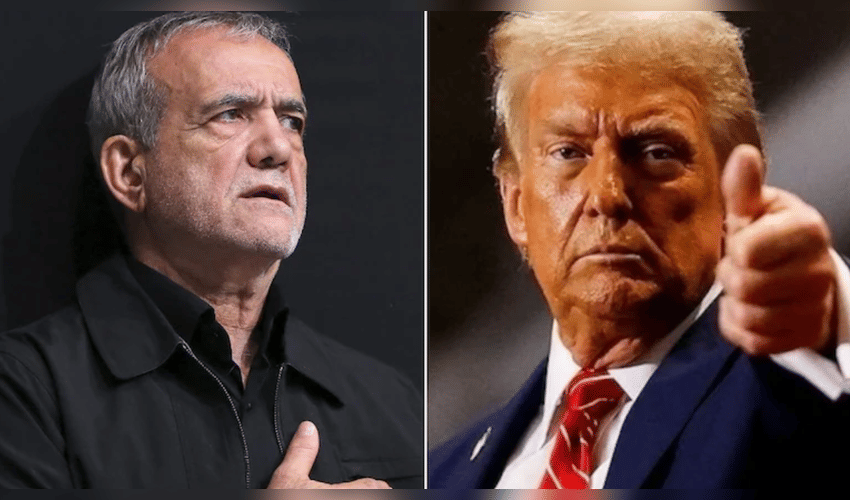

US President Donald Trump has expressed optimism that a diplomatic agreement with Tehran could soon be achieved, though he warned that military strikes against Iran would resume with greater intensity if negotiations collapse. His comments followed reports that Washington has proposed a one-page memorandum of understanding designed to halt the ongoing Middle East conflict and pave the way for broader nuclear negotiations.
Iran has not yet officially responded to the proposal. However, Iranian negotiators have accused the US of attempting to pressure the Islamic republic into submission. According to Reuters and Axios, both countries are now close to finalising a preliminary framework agreement that could end hostilities and establish the foundation for detailed future talks. While no formal agreement has been reached, sources familiar with the discussions said this is the nearest the two sides have come to a breakthrough since the conflict began. US negotiators are reportedly awaiting Iran’s response to several major issues within the next two days.
Information about the proposed 14-point memorandum has mainly emerged from American and Pakistani sources, while Iran has remained relatively reserved. Iranian Foreign Minister Abbas Araghchi stated that Tehran would only accept a “fair and comprehensive” agreement, without directly referring to the draft framework. According to Axios, the proposed memorandum includes Iran agreeing to temporarily halt uranium enrichment, while the United States would gradually ease sanctions and release billions of dollars in frozen Iranian assets. Both nations would also remove restrictions affecting movement through the Strait of Hormuz.
The document is intended as a broad framework rather than a detailed treaty. It would officially declare an end to the conflict and launch a 30-day negotiation period aimed at reaching a more comprehensive agreement on the demands of both sides. Talks could reportedly take place in Islamabad or Geneva. One of the major unresolved issues is the duration of Iran’s enrichment freeze. Discussions are currently focused on a moratorium lasting between 12 and 15 years. Iran had earlier proposed a five-year suspension, while the US initially sought a 20-year period. American negotiators also want any violation by Iran to automatically extend the moratorium. After the agreed period ends, Iran may be permitted to enrich uranium up to 3.67 percent purity.
The memorandum would also require Iran to permanently renounce the pursuit of nuclear weapons and refrain from any weaponisation-related activities. In addition, Tehran would commit to shutting down underground nuclear operations and accept stricter international inspections, including surprise checks by United Nations inspectors.
In return, Washington would gradually lift sanctions and release Iranian funds frozen in international accounts. Reports also suggest Iran may be required to transfer its stockpile of highly enriched uranium خارج the country, potentially to the United States — a demand Tehran has previously opposed. Many of the proposed terms would only take effect once a final agreement is achieved, meaning tensions could still continue despite an end to direct fighting. The memorandum is reportedly being negotiated by US envoys Steve Witkoff and Jared Kushner alongside Iranian representatives through direct and indirect channels.
Despite ongoing discussions, US officials believe divisions within Iran’s leadership between moderates and hardliners could complicate efforts to secure consensus. Some American officials remain doubtful that even an initial agreement can ultimately be reached. Trump stated that if Iran accepts the proposed terms, the conflict could end quickly. Otherwise, he warned that military action would resume at a far greater scale. He later described recent discussions as productive and said a deal remained “very possible.”
US Secretary of State Marco Rubio emphasised that a complete agreement would require time because of its technical complexity. He said the immediate priority was establishing a clear diplomatic understanding on key negotiation points and concessions from both sides. However, Rubio also criticised Iran’s leadership and questioned whether they were genuinely willing to compromise.
Iranian Foreign Ministry spokesperson Esmaeil Baqaei confirmed that Tehran is still reviewing the American proposal and would communicate its final position to mediator Pakistan after completing internal consultations. Iranian Parliament Speaker Mohammad Bagher Ghalibaf accused Washington of attempting to weaken Iran through economic pressure, naval restrictions and media influence in an effort to force the country into surrender.



